Best Undetectable AI Interview Tools for Live Interviews (2026)
 Rishabh Jain5 min read
On this page
- TL;DR
- Why Undetectable AI Interview Tools Matter in…
- What Does "Undetectable" Mean in Live Intervie…
- What Makes a Good Undetectable AI Tool for Liv…
- Undetectable Live Interview Assistance vs Mock…
- Best Undetectable AI Interview Tools for Live…
- Best Undetectable AI Interview Tools for Live…
- Role-Specific Recommendations
- How to Choose the Right Undetectable AI Interv…
- Ethical Use and Recruiter Expectations
- FAQ
- Conclusion
What changed in May 2026
Real detection findings since our last hands-on testing:
- Parakeet AI surfaces as "pmodule" in macOS Activity Monitor. Our May 2026 hands-on testing found the running process is visible to anyone who opens Activity Monitor during a screen-share. Some proctoring tools (HireVue, HackerRank, Codility) also scan for non-standard process names. Detail in our Parakeet AI review.
- Browser-tab proctoring is the new vector. Big Tech and large finance proctoring stacks now use tab-snapshot detection. Tools running through a browser interface (Final Round AI's web interface, Cluely's web view) show as a visible tab and can be flagged. Native desktop overlays (Interview Sidekick, LockedIn AI) render outside the captured screen feed.
- Cluely controversy keeps surfacing. The founder's Columbia suspension for an earlier interview-cheating tool is now a recurring concern in user threads, and recruiters increasingly screen for brand names tied to cheating. Fortune coverage.
- The arms race is real. Tools that explicitly market "undetectable cheating" are getting scrutinized harder by proctoring vendors. Tools framing themselves as "practice and coaching" (Interview Sidekick, Yoodli) sit on the safer side of this race.
- Test before you rely on it. Detection behavior changes monthly. Always do a dry run with a friend in a Zoom call before using any stealth tool in a real proctored interview.
TL;DR
Live interviews in 2026 are fast, conversational, and increasingly structured. The best undetectable AI interview tools help job seekers stay clear-headed, structured, and confident during live interviews without interrupting the flow or drawing attention. These tools are designed to run quietly in the background, offering real-time assistance and coaching rather than scripted answers.
This guide reviews the best undetectable AI interview tools for live interviews in 2026, comparing how discreetly they operate, how helpful they are in real time, and which interview formats they support. We cover tools built for live interview assistance, real-time coaching, and low-visibility support across roles like software engineering, product management, sales, and entry-level interviews.
If you want a quick breakdown:
Interview Sidekick offers one of the most balanced invisible live interview assistance experiences with structured, real-time guidance.
LockedIn focuses on quiet, real-time interview support with minimal on-screen distraction.
Final Round AI works well for competitive, high-pressure interviews with structured thinking support.
Parakeet AI, Verve AI, and Stealth Interview are useful for low-visibility live interview coaching and practice.
Interview Coder is focused on technical interviews where discretion matters most.
Use this guide to choose an undetectable AI interview assistant that fits your interview format, role, and comfort level.
Why Undetectable AI Interview Tools Matter in 2026
Live interviews in 2026 are faster, more conversational, and more demanding than ever. Interviewers expect candidates to think clearly, explain their reasoning out loud, and respond smoothly to follow-up questions without long pauses. This format rewards clarity and composure, but it also increases pressure.
Most candidates do not struggle because they lack knowledge or experience. They struggle during live interviews because of time pressure. Losing track of a thought, forgetting a key point, or rushing an explanation can happen even when someone is well prepared. These small moments often make the difference between a strong interview and a missed opportunity.
As interviews have become more dynamic, there has been growing demand for undetectable AI interview tools that can provide real-time assistance without interrupting the conversation. Job seekers are looking for support that stays discreet, does not appear on screen, and does not distract them or the interviewer. The goal is not to replace thinking, but to help candidates stay structured and confident while speaking.
It is also important to separate preparation tools from live interview support. Preparation tools are designed for practice before the interview, such as mock interviews or question review. Undetectable live interview tools are different. They are built to support candidates during the interview itself, offering subtle guidance that helps with recall, structure, and pacing while keeping attention focused on the conversation.
In short: Undetectable AI interview tools are platforms designed to support candidates during live interviews with real-time guidance that stays discreet and out of view.
What Does "Undetectable" Mean in Live Interviews?
When candidates search for undetectable or invisible interview tools, they are not looking for shortcuts. They are looking for support that does not interrupt the interview or change how the conversation feels to the interviewer.
In live interviews, undetectable means the tool stays out of sight and out of the way. There is no visible interface shared on screen, no pop-ups, and no sudden changes that could distract either side. The interview remains focused on the human conversation.
Another key aspect is avoiding screen sharing conflicts. Many interviews involve screen sharing for presentations, coding exercises, or portfolio reviews. Undetectable tools are designed to avoid interfering with these moments, allowing candidates to continue smoothly without worrying about what the interviewer can see.
Low distraction is equally important. Tools that demand constant attention or visual scanning increase cognitive load and make answers feel unnatural. Undetectable tools prioritize minimal visual and mental effort so candidates can listen, think, and respond naturally.
The support itself must also sound human. Effective undetectable interview tools help with structure, phrasing, or recall, but they do not generate rigid or scripted responses. The candidate remains in control of the conversation, using the guidance as a reference rather than a script.
Finally, responsible usage matters. Undetectable tools are designed to support thinking and communication, not to misrepresent skills or deceive interviewers. Ethical design focuses on helping candidates express their own experience clearly while respecting the intent of the interview process.
What Makes a Good Undetectable AI Tool for Live Interviews?
Not all interview tools are built for live conversations. A good undetectable AI tool is designed to support candidates during the interview itself, without interrupting focus or altering the flow of discussion.
Core Qualities
Runs quietly during live interviews: The best tools operate in the background with no alerts, pop-ups, or visual noise. Candidates should be able to focus on listening and speaking without constantly checking an interface.
Supports real-time response structuring: Live interviews move fast. Effective tools help candidates organize thoughts quickly, highlight key points, and stay on track while answering open-ended questions.
Compatible with voice-based interviews: Most interviews now happen over video or voice calls. Undetectable tools must work seamlessly alongside spoken responses without requiring visible interaction or breaking eye contact.
Behavioral and role-specific coaching: Strong tools adapt guidance based on role, seniority, and question type. Behavioral questions, technical explanations, and situational scenarios all require different structures and emphasis.
Minimal on-screen presence: Low visibility is essential. Good tools avoid overlays, floating windows, or anything that could appear during screen sharing or distract the candidate mid-sentence.
Designed for pressure, not just prep: Live interviews introduce stress, interruptions, and follow-up questions. Undetectable tools are built to function in real conditions, not only in calm practice environments.
Undetectable Live Interview Assistance vs Mock Interview Tools
Live interview assistance and mock interview tools serve different purposes, and understanding the difference helps candidates choose the right support at the right time.
Real-time assistance vs practice simulations: Undetectable live interview tools provide guidance during the interview itself. Mock interview tools focus on preparation, helping candidates practice answers, timing, and delivery before the actual conversation.
When invisible tools help most: Live assistance is most useful when candidates already know the material but want help staying structured, calm, and clear under pressure. These tools support recall, pacing, and clarity in real time.
When mock interviews are the better choice: Mock interviews are ideal earlier in the preparation process. They help candidates build confidence, identify weak areas, and refine storytelling without the pressure of a real interview.
Why many candidates use both: Many job seekers practice with mock interviews first, then rely on undetectable live tools for subtle support during the actual interview. Together, they cover both preparation and performance.
Best Undetectable AI Interview Tools for Live Interviews Comparison Table
Tool | Free version | Best for | Live interview support | Visibility level | Voice compatibility | Real-time coaching | Behavioral guidance | Role coverage | Risk of over-reliance | Pricing |
|---|---|---|---|---|---|---|---|---|---|---|
Interview Sidekick | Free trial available | Job seekers who want undetectable, real-time interview assistance and coaching during live interviews | Yes | Low (designed to stay invisible during screen sharing) | Yes | Yes | Yes | Software engineering, product, design, sales, behavioral | Low when used alongside practice and preparation | Included in core Interview Sidekick pricing (Stealth Mode is not a separate add-on) |
LockedIn | Limited free access | Candidates who want a hidden desktop interview copilot | Yes | Low | Yes | Yes | Limited | Multi-role, technical and behavioral | High if relied on without practice | Paid subscription (monthly / quarterly plans) |
Final Round AI | Limited free access | Competitive and strategy-heavy interviews | Yes | Medium | Not clearly stated | Yes | Limited | Business, consulting, product, tech | High | Paid plans (pricing varies by plan) |
Parakeet AI | Trial credits | Quick live mock interviews and fast practice | Partial | Medium | Not clearly stated | Partial | Limited | General roles | Medium | Credit-based pricing |
Interview Coder | Yes | Coding and technical interviews | Partial | Low to medium | Not clearly stated | Partial | No | Software engineering | Medium | Free + Pro plans |
Verve AI | Yes | Communication and delivery coaching with live support | Yes | Low | Yes | Yes | Partial | General roles | Medium | Free + paid tiers |
Stealth Interview | No | Users seeking a discreet desktop interview assistant | Partial | Medium | Not clearly stated | Partial | Limited | General roles | High | Monthly and annual plans |
Best Undetectable AI Interview Tools for Live Interviews
Each tool below is reviewed from a job seeker's perspective, with focus on live interview usability, visibility, and responsible real-time support.
Interview Sidekick
What it does
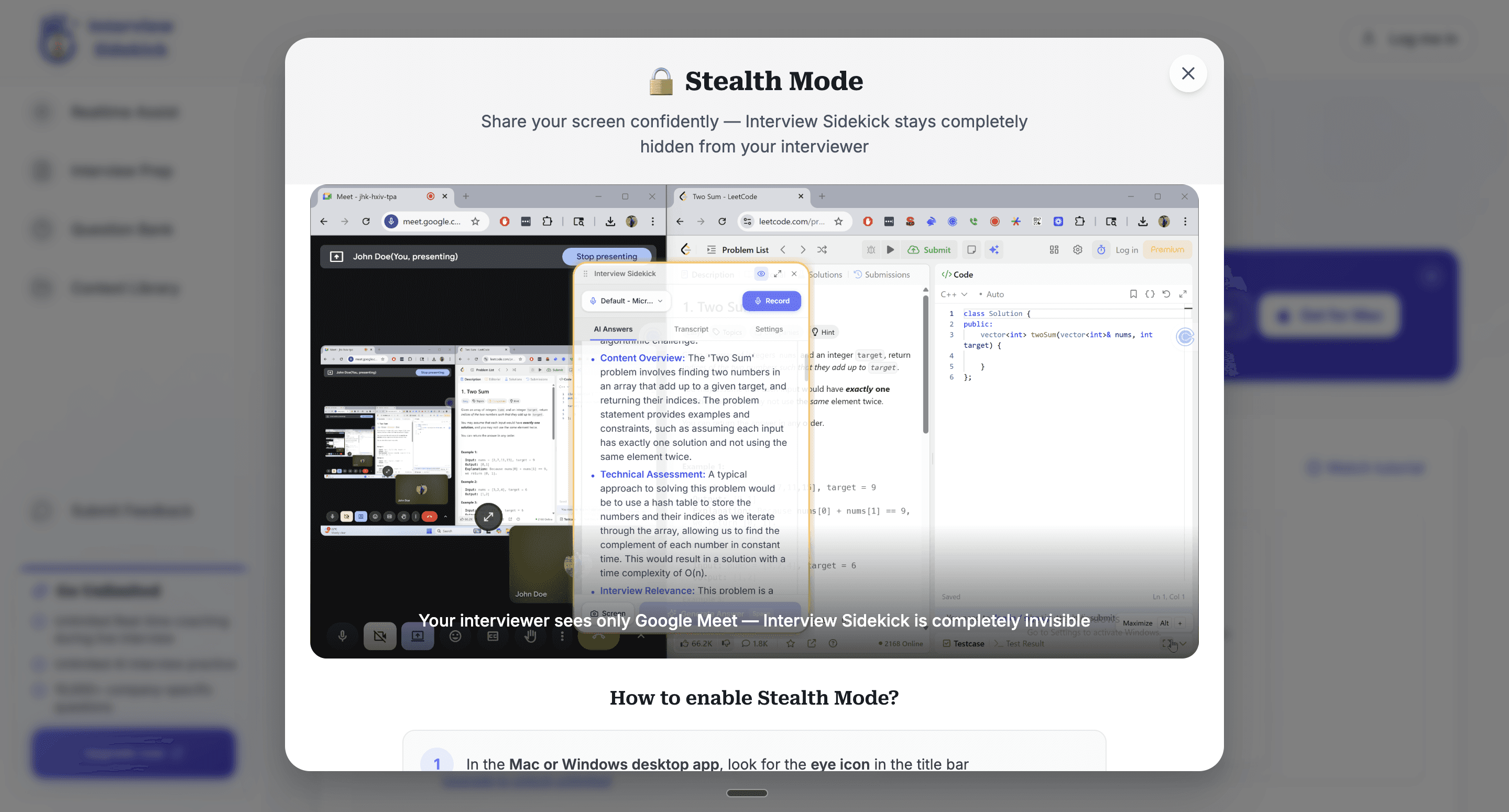
Interview Sidekick provides real-time interview assistance and coaching during live interviews through its Stealth Mode, which is designed to remain fully invisible to interviewers. It supports candidates with structured guidance, behavioral framing, and role-specific help while staying completely out of view.
Best for
Job seekers who want undetectable, real-time interview support that works during live interviews without appearing on screen or interfering with screen sharing.
Strengths
Stealth Mode is fully invisible to interviewers during live interviews
Does not appear during screen sharing or video calls
Provides real-time guidance focused on structure, clarity, and reasoning
Supports behavioral, technical, and role-specific interviews
Encourages natural delivery rather than scripted responses
Limitations
Works best when candidates have prepared and understand the role
Requires practice to balance live conversation with subtle guidance
Who should choose it
Candidates who want true low-visibility live interview assistance that helps them think clearly, stay structured, and respond confidently without drawing attention.
Interview Sidekick is built for candidates who want support that stays invisible while they remain fully present in the conversation.
LockedIn
What it does
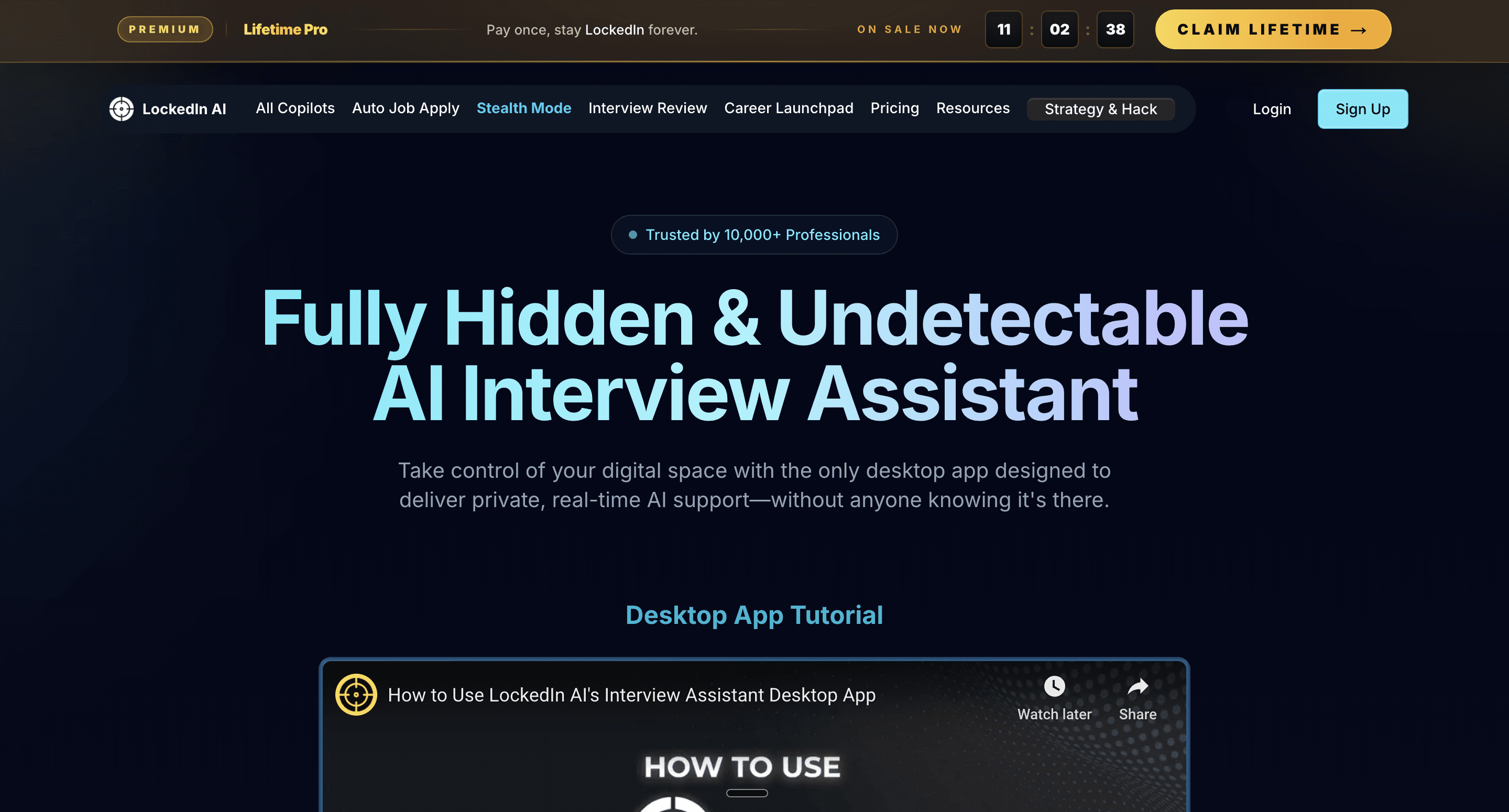
LockedIn acts as a quiet interview copilot, offering live interview support through a low-visibility desktop interface.
Best for
Candidates looking for discreet, real-time prompts during live interviews.
Strengths
Low-visibility design intended to remain hidden during interviews
Focus on real-time assistance rather than practice only
Works across different interview formats
Limitations
Less emphasis on deep behavioral coaching
Can encourage reliance if not paired with practice
Who should choose it
Candidates who want simple, real-time support with minimal interface presence.
Most effective for live support after solid preparation.
Final Round AI
What it does
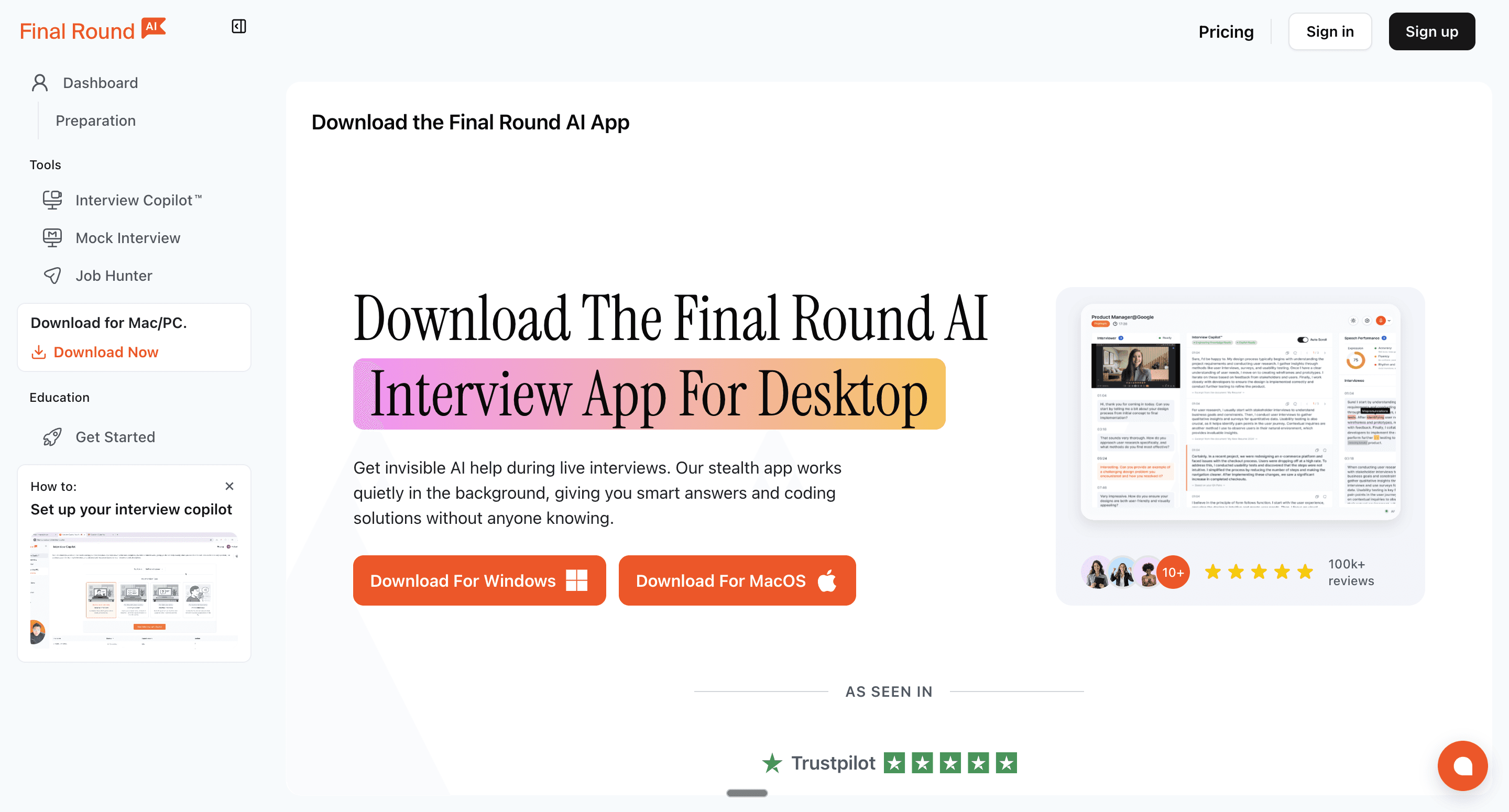
Final Round AI focuses on structured interview coaching, especially for competitive and high-pressure interviews.
Best for
Candidates interviewing for strategy-heavy, consulting, or competitive tech roles.
Strengths
Strong focus on structured thinking
Helpful for framing complex or high-stakes responses
Supports interview readiness under pressure
Limitations
Visibility and stealth features are less emphasized
Not primarily designed for invisible, low-distraction use
Who should choose it
Candidates preparing for demanding interviews where structured reasoning is critical.
Best for sharpening thinking before or during high-pressure interviews, not for full invisibility.
Related:
Parakeet AI
What it does
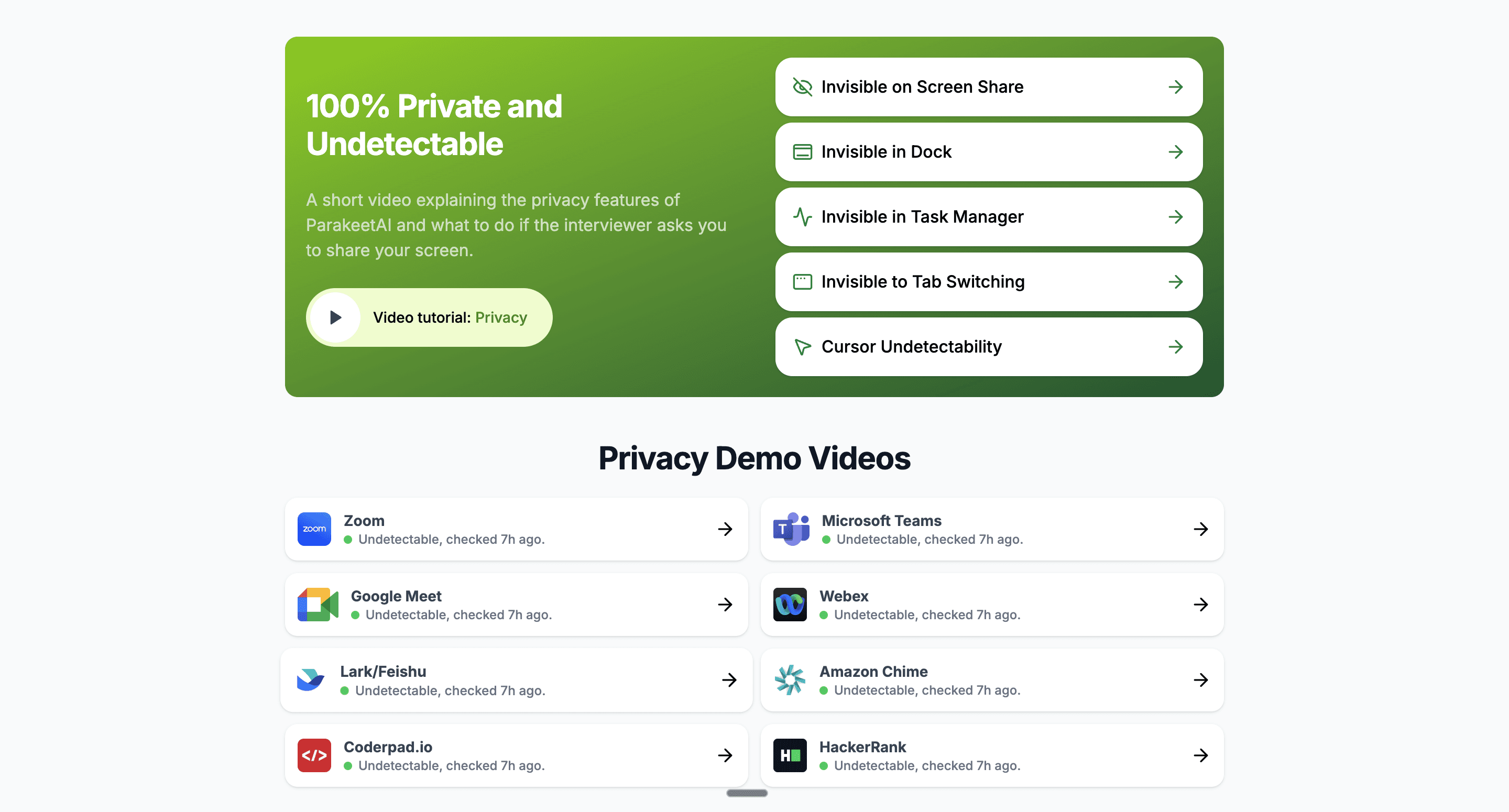
Parakeet AI offers lightweight interview assistance focused on quick feedback and practice-style support.
Best for
Job seekers who want fast, low-friction interview practice or light live guidance.
Strengths
Simple interface
Quick feedback loops
Useful for short practice or refresh sessions
Limitations
Limited depth for live interview coaching
Not built specifically for undetectable live use
Who should choose it
Candidates who want quick reinforcement rather than deep real-time support.
Best for short sessions and repetition, not complex live interviews.
Related:
Interview Coder
What it does
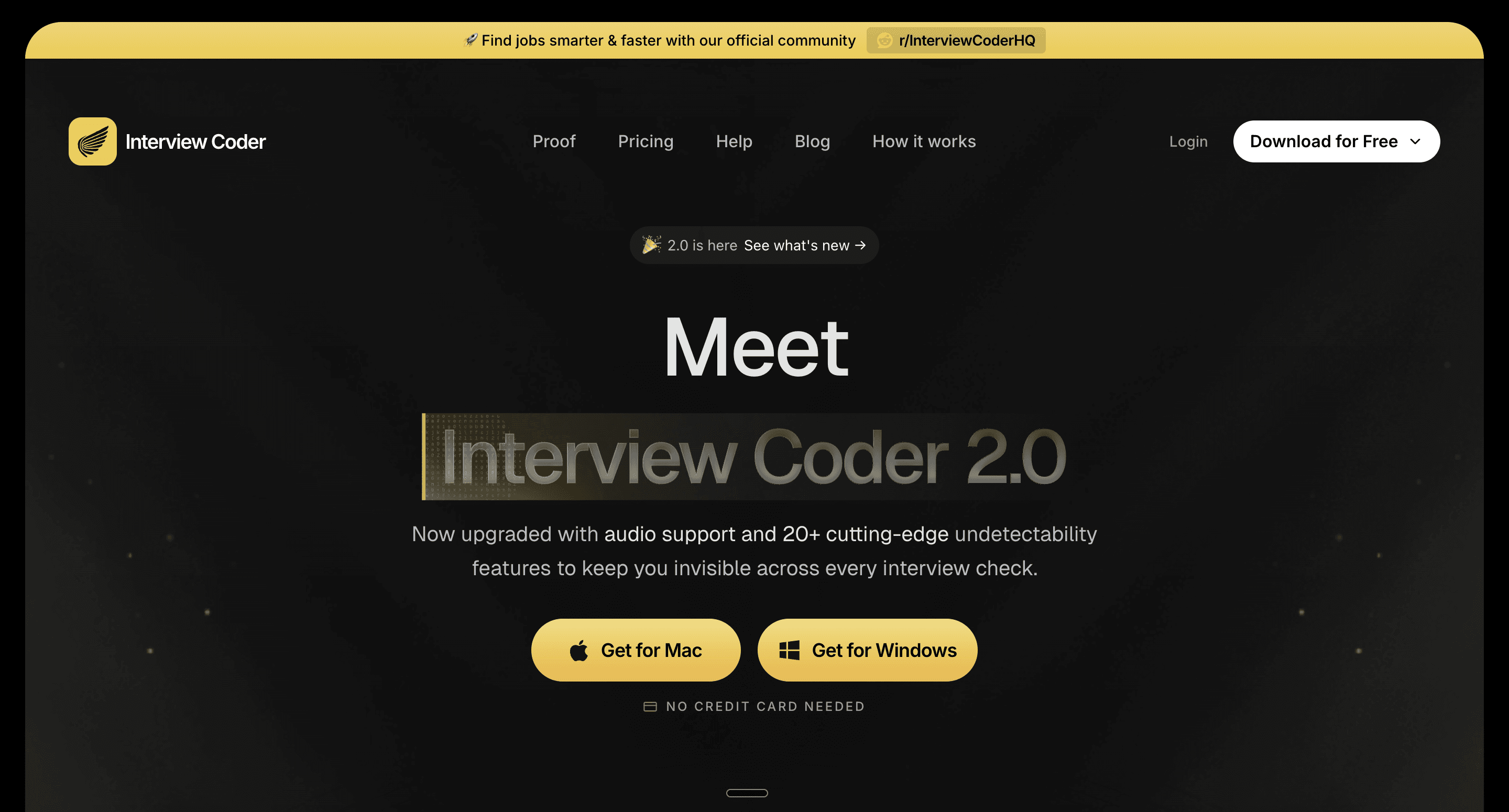
Interview Coder supports candidates during coding interviews with technical reasoning assistance.
Best for
Software engineers preparing for coding and technical interviews.
Strengths
Focused on technical and coding interview scenarios
Designed with discretion in mind
Useful for reasoning through problems
Limitations
Limited behavioral or non-technical support
Not suitable for general interview formats
Who should choose it
Candidates focused specifically on technical or coding interviews.
Most effective when used to support reasoning, not to generate solutions.
Verve AI
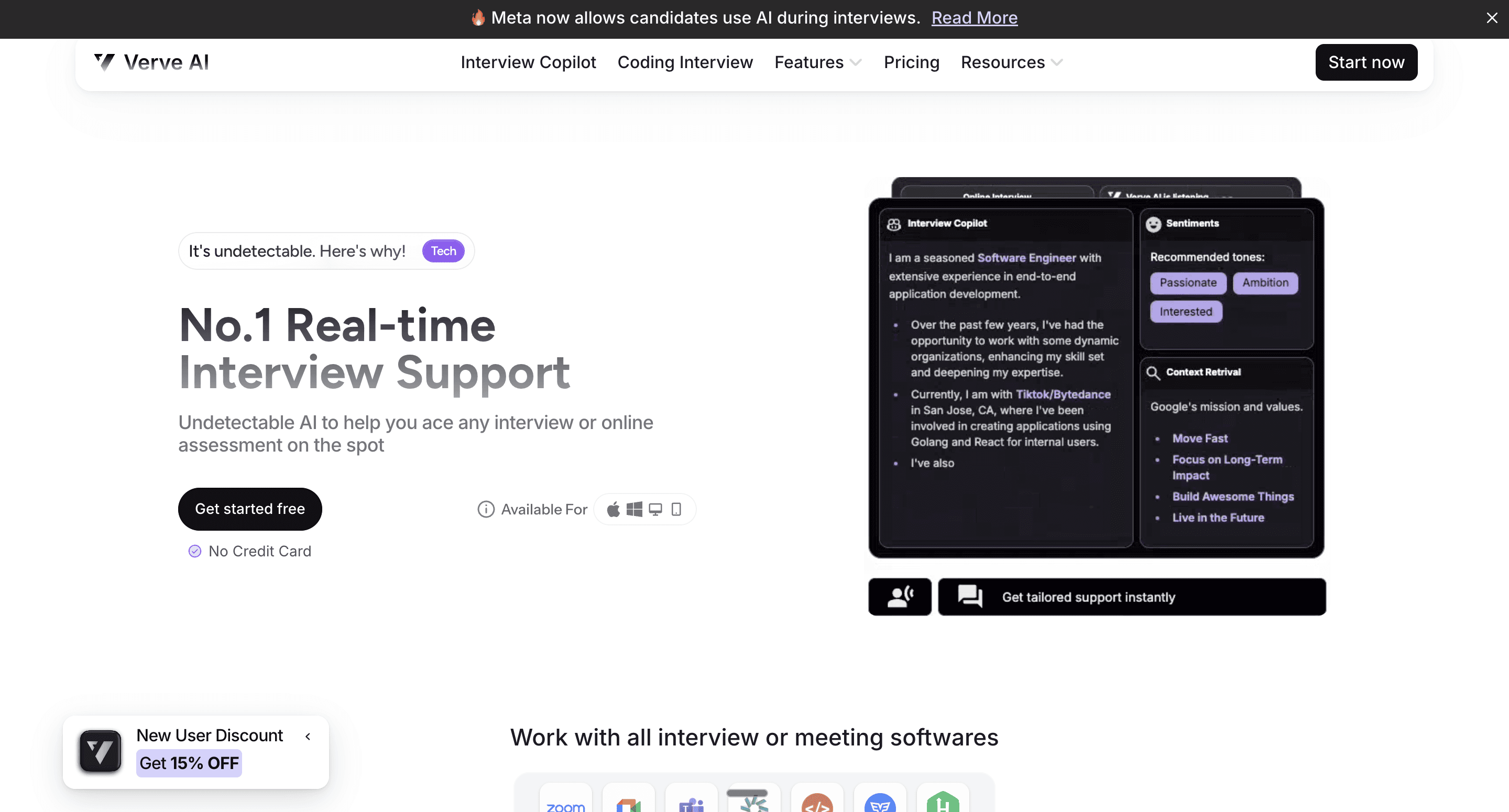
What it does
Verve AI focuses on communication, delivery, and speaking clarity during interviews.
Best for
Candidates who want help improving tone, pacing, and verbal clarity.
Strengths
Strong communication and delivery feedback
Helpful for voice-based interviews
Supports confidence and composure
Limitations
Less focus on technical or role-specific depth
Not primarily positioned as an undetectable live assistant
Who should choose it
Candidates who want to improve how they speak, not what they say.
Best for delivery coaching rather than content guidance.
Stealth Interview
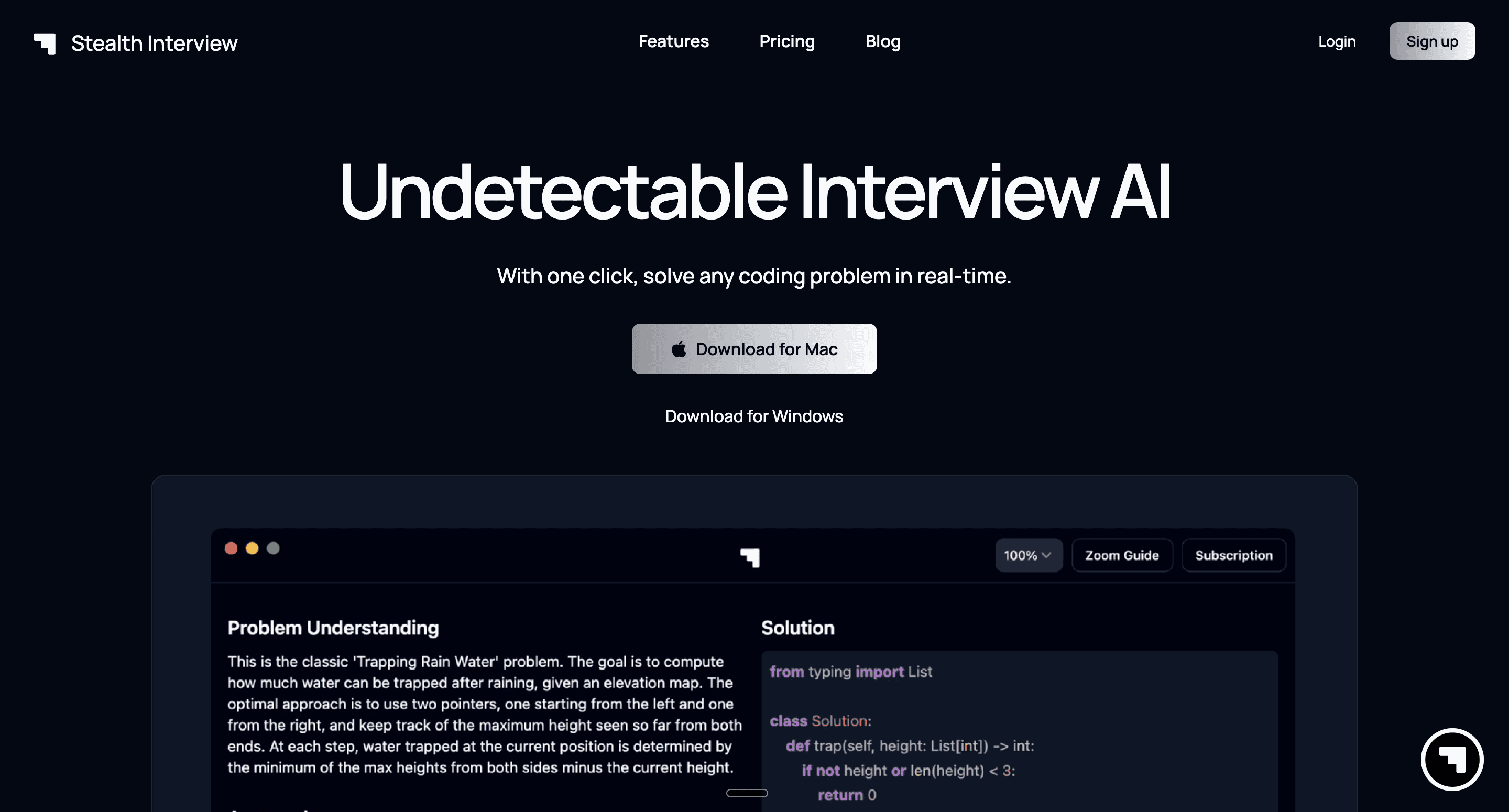
What it does
Stealth Interview is built around the idea of low-visibility interview assistance through a desktop setup.
Best for
Candidates seeking discreet, always-on interview support.
Strengths
Emphasis on remaining unnoticed
Designed for minimal interface presence
Simple setup
Limitations
Limited transparency around coaching depth
Less clarity on role-specific capabilities
Who should choose it
Candidates prioritizing invisibility over advanced coaching features.
Best for basic live support where discretion is the top priority.
Role-Specific Recommendations
Different roles place different demands on candidates during live interviews. Choosing an undetectable AI interview tool that matches how your interviews are structured can make a real difference.
Software Engineers
Live technical interviews often involve problem solving, system design, and explaining trade-offs under time pressure. Engineers benefit most from tools that support structured thinking and technical reasoning without interrupting the flow of discussion. Low-visibility assistance is especially important during screen sharing and coding exercises.
Best fit: Tools that stay invisible, support technical clarity, and help organize explanations while you talk.
Product Managers
Product interviews focus heavily on structured thinking, prioritization, and clear communication. Candidates are often asked to reason through ambiguous problems and explain decisions step by step. Undetectable tools that help frame answers and maintain logical flow can be especially helpful.
Best fit: Tools that provide real-time guidance for structured responses without sounding scripted.
Sales and Client-Facing Roles
Sales interviews are conversational by nature and place strong emphasis on confidence, listening, and objection handling. Candidates need support that helps with clarity and pacing without breaking rapport or eye contact.
Best fit: Low-distraction tools that assist with response structure and messaging while keeping the conversation natural.
Entry-Level Candidates
Entry-level interviews can be stressful due to limited experience and high nerves. Candidates often know the answers but struggle with delivery, structure, or recall. Undetectable tools can help maintain composure and guide responses without overwhelming the interview.
Best fit: Simple, discreet tools that focus on structure, clarity, and confidence rather than advanced coaching.
How to Choose the Right Undetectable AI Interview Tool
Not every candidate needs the same level of live support. Choosing the right undetectable AI interview tool depends on how your interviews are run and how comfortable you are with real-time guidance.
Live assistance vs practice only: Some tools are built for use during live interviews, while others are meant only for preparation. If your main concern is staying structured under pressure, look for tools designed for live assistance. If you are still learning how to answer questions, practice tools may be more useful at first.
Voice vs text support: Most interviews are voice-based. Tools that work well alongside spoken responses help you maintain eye contact and natural delivery. Text-only tools may be better suited for preparation or written interview formats.
Visibility tolerance: Some candidates are comfortable with subtle on-screen cues, while others prefer tools that remain completely out of view. Choose a tool that matches your comfort level with visibility, especially if screen sharing is part of the interview.
Interview format and role: Technical interviews, behavioral interviews, and sales conversations all require different types of support. Make sure the tool aligns with the structure and expectations of your role.
Comfort with real-time guidance: Live assistance works best when you are comfortable using it as a reference, not a script. Candidates who prefer full independence may benefit more from practice tools, while others appreciate subtle guidance.
"Good tools support thinking, not replace it."
Ethical Use and Recruiter Expectations
Undetectable AI interview tools are most effective when used responsibly. Recruiters still expect candidates to demonstrate real understanding, experience, and judgment during interviews.
Responsible use during live interviews: These tools should help you organize thoughts, recall key points, and communicate clearly. They are not meant to replace knowledge or misrepresent your abilities.
Why authenticity still matters: Interviewers are skilled at recognizing genuine insight versus memorized responses. Candidates who rely too heavily on tools often sound unnatural or disconnected from the conversation.
Avoiding over-reliance: The safest and most effective approach is to practice beforehand and use live assistance only as light support. When tools are used this way, they enhance performance without undermining credibility.
FAQ
What if the interviewer asks me to share my entire screen?
With undetectable AI interview tools that are designed to be fully invisible, full screen sharing is not an issue. These tools do not display visible overlays, pop-ups, or UI elements that appear on the shared screen. They are built to remain completely out of view, even when the entire screen is shared.
For tools specifically designed for stealth use, interviewers will not see the assistance running in the background. Candidates can continue the interview normally without visual interference or disruption.
That said, responsible use still matters. The tool should support clarity and structure while the candidate remains actively engaged in the conversation.
What is the hidden AI tool for interviews?
A hidden AI interview tool refers to software designed to provide real-time guidance while staying out of view during live interviews. These tools focus on low-visibility design, minimal on-screen presence, and discreet support rather than visible interfaces or scripted outputs.
Which AI interview tools offer stealth mode during live interviews?
Some AI interview tools are built specifically with stealth or low-visibility modes that allow candidates to receive real-time support without anything appearing on screen. Tools such as Interview Sidekick, LockedIn, Verve AI, and Stealth Interview are designed to operate discreetly during live interviews by avoiding screen overlays, pop-ups, or visible UI elements. Their stealth-focused designs allow candidates to continue the conversation naturally while receiving structured guidance in the background, making them suitable for live interviews where remaining invisible to interviewers is essential.
Which AI interview tool is undetectable during live interviews?
Interview Sidekick is designed to be undetectable during live interviews through its Stealth Mode, which remains fully invisible to interviewers. It does not display any visible interface, overlays, or prompts on the shared screen and continues to stay hidden even during full screen sharing. This allows candidates to receive real-time interview assistance and structured guidance without altering the interview experience or drawing attention. Other tools may reduce visibility, but Interview Sidekick is specifically built and positioned to remain invisible throughout live interviews when used as intended.
Is Interview Sidekick fully undetectable or invisible to interviewers during live interviews?
Interview Sidekick's Stealth Mode is designed to remain fully invisible to interviewers during live interviews. It does not appear during screen sharing and provides real-time guidance without visible UI elements, allowing candidates to stay focused on the conversation.
Are AI interview tools detectable?
AI interview tools are not inherently detectable, but visibility depends on how they are designed and used. Tools with visible overlays or active on-screen prompts may be noticeable, especially during screen sharing. Low-visibility tools are built to minimize this risk.
Can interviewers notice AI assistance?
Interviewers may notice assistance if responses sound scripted, delayed, or unnatural. When used responsibly, undetectable AI interview tools focus on helping candidates organize thoughts and communicate clearly, not on generating robotic answers. Natural delivery and preparation remain essential.
Conclusion
Live interviews in 2026 demand more than just preparation. They require clarity under pressure, structured thinking, and confident communication in real time. Undetectable AI interview tools exist to support candidates in those moments without interrupting the conversation or changing how the interview feels to the interviewer.
When used responsibly, these tools do not replace skill or experience. They help candidates organize thoughts, stay composed, and express their own knowledge more clearly. The most effective tools are designed to stay invisible, provide guidance without scripts, and support natural delivery rather than control it.
Not every candidate needs live assistance, and not every interview requires it. The best approach is to practice thoroughly, understand your role, and use undetectable tools only as light support during high-pressure moments. When preparation and live guidance work together, candidates are better equipped to perform at their true level.
Choosing the right undetectable AI interview tool comes down to how your interviews are structured, how comfortable you are with real-time support, and how much value you place on staying fully present in the conversation. Used thoughtfully, these tools can be a powerful aid in modern interviewing without compromising authenticity or trust.



 4.8 from 2,500+ reviews
Turn failed interviews into offers accepted
No credit card required • Cancel anytime