Best AI Tools for Live Interviews and Real-Time Interview Assistance and Coaching
 Rishabh Jain
TL;DR
Live interviews in 2026 are faster, more structured, and more conversational than ever. The best AI tools for live interviews help job seekers think clearly under pressure, respond with structure, and stay confident during real interview conversations. Rather than replacing preparation, these tools provide real-time interview assistance, coaching cues, and feedback that support clarity, pacing, and decision-making when it matters most.
This guide reviews the best AI tools for live interviews and real-time interview assistance and coaching, comparing how they perform during actual interviews versus practice sessions. We cover tools built for real-time support, live mock interviews, voice-based practice, and structured coaching across roles such as software engineering, product management, sales, design, and entry-level interviews.
If you want a quick breakdown:
Interview Sidekick offers one of the most complete real-time interview assistance experiences, combining live support with structured coaching.
Final Round AI is strong for competitive, strategy-heavy, and high-pressure interviews.
Parakeet AI, Huru, and Interviews Chat work well for live mock interviews and quick practice sessions.
Interview Copilot, Verve AI, LockedIn, Beyz, and Interviews by AI offer varying levels of live guidance, feedback, and coaching support.
Google Interview Warmup remains a solid free option for interview practice, though it is not designed for real-time assistance.
Use this guide to choose the tool that fits your interview format, role, and comfort level with live interview support and coaching.
Why Live Interview AI Tools Matter in 2026
Live interviews in 2026 move quickly and feel more conversational than ever. Interviewers expect candidates to think out loud, explain decisions clearly, and adapt to follow-up questions in real time. For many job seekers, this format is more challenging than traditional question-and-answer interviews.
Most candidates do not struggle because they lack knowledge. They struggle because live interviews create pressure. Mental blanks, rushed explanations, and missed points are common even for well-prepared applicants. This is especially true in technical, product, sales, and behavioral interviews where clarity and structure matter as much as the answer itself.
As interviews have become more dynamic, real-time interview assistance and coaching tools have gained attention. These tools are designed to support candidates during live or simulated interviews by helping them stay organized, recall key ideas, and respond more confidently as the conversation unfolds.
When used responsibly, live interview AI tools act as support systems rather than replacements for preparation. They help candidates maintain composure, structure responses, and recover quickly if they lose their train of thought. This can lead to clearer communication, better pacing, and stronger overall interview performance.
In short:
AI tools for live interviews are platforms that support candidates during real or simulated interviews with real-time guidance, feedback, and coaching.
What Makes a Good AI Tool for Real-Time Assistance and Coaching?
Not every interview tool is built for live situations. A good AI tool for real-time interview assistance should support candidates in the moment without distracting from the conversation. The goal is to help you think clearly and communicate better, not to interrupt or take over the interview.
Core Qualities
Real-time response support
The most important feature is the ability to provide guidance as the interview happens. This can include reminders, structure cues, or prompts that help you stay on track without slowing you down.
Natural conversational flow
Live interviews are dynamic. A good tool supports natural back-and-forth conversation rather than rigid scripts. It should adapt as the discussion evolves and allow you to respond fluidly.
Voice-based interview compatibility
Many interviews now happen over video or voice calls. Effective tools work well alongside spoken interviews and help candidates organize thoughts while speaking, not just typing.
Behavioral and role-specific coaching
Different roles require different communication styles. Strong tools provide guidance tailored to behavioral questions, technical explanations, or role-specific scenarios so responses stay relevant.
Low distraction during live conversations
Anything used during a live interview must be subtle. Good tools are designed to minimize visual or cognitive overload so candidates can stay engaged with the interviewer.
Ethical and responsible usage design
Responsible tools encourage preparation and clarity rather than copying answers. They support thinking and recall while keeping the candidate’s own understanding at the center.
Works under pressure, not just during prep
Some tools perform well in practice but fall apart under real pressure. The best real-time tools remain helpful during fast-paced, unpredictable conversations.
Live Interview Assistance vs Mock Interview Practice
Live interview assistance and mock interview practice serve different purposes in interview preparation. Understanding how they differ helps job seekers use each tool at the right time and avoid relying on the wrong type of support.
Real-time coaching vs simulated interviews
Live interview assistance provides guidance during an actual or live interview. It helps candidates stay organized, recall key points, and respond with structure as questions are asked.
Mock interview practice simulates interviews ahead of time. These tools allow candidates to rehearse answers, practice delivery, and receive feedback without the pressure of a real interview.
When live assistance helps most
Live assistance is most helpful during high-pressure interviews where speed and clarity matter. It supports candidates who already understand the material but want help staying composed, structured, and confident during real conversations.
When mock interviews are the better option
Mock interviews are better for learning. They allow candidates to practice answering questions, refine storytelling, and improve delivery before the interview. They are especially useful for freshers, career switchers, and candidates preparing for new roles.
Why many candidates combine both
Many job seekers use mock interviews to prepare and live assistance to perform. Practicing first builds understanding and confidence, while real-time support helps candidates execute under pressure.
This combination reduces surprises, improves recall, and leads to clearer communication during interviews.
Best AI Tools for Live Interviews and Real-Time Interview Assistance and Coaching Comparison Table
Tool | Free version | Best for | Live interview support | Voice capability | Real-time coaching | Feedback depth | Behavioral guidance | Role coverage | Risk of over-reliance | Pricing |
|---|---|---|---|---|---|---|---|---|---|---|
Interview Sidekick | Yes (Free access + upgrades) | Real-time interview assistance + coaching | Yes (real-time guidance) | Yes (supports spoken scenarios) | Yes (live insights & cues) | High (clarity + structured support) | Yes (behavioral insights) | Broad (behavioral + technical + role prompts) | Moderate (support during actual interview requires skill) | Freemium / paid tiers |
Google Interview Warmup | Yes (free) | Practice warmups, basic feedback | No (prep only) | No | No | Basic reflection insights | Limited | General | Low | Free |
Final Round AI | Yes (trial / freemium) | Competitive and strategy-heavy interviews | Yes (Interview Copilot) | Depends on integration | Yes (structure + responses) | Moderate to high | Yes | Roles + industries | Moderate | Freemium + paid |
Parakeet AI | Yes (free tier) | Quick real-time practice | Yes (real-time answers implied) | Implied | Yes (suggests answers) | Basic | Limited | General | Moderate | Freemium |
Huru | Limited (trial or tiered) | Video mock interview practice | No (mock sessions) | Yes (video prompts) | Basic during practice | Moderate | Yes | General | Low | Paid tier |
Interviews Chat | Varies (some free access) | Text-based real-time guidance | Yes (copilot during conversation) | No | Yes (real-time suggestions) | Moderate | Yes | General | Low | Freemium / paid |
Interview Copilot | Varies | Live interview assistance | Yes | Depends | Yes | Moderate | Yes | General | Moderate | Paid |
InterviewBee | Yes (free plan) | Live interview assistant + mock | Yes (live support) | Yes (voice practice) | Yes (real-time talking points) | High (role + scenario) | Yes (structured scenarios) | Broad | Moderate | Freemium / paid |
Verve AI | Yes (starter / freemium) | Live interview copilot | Yes (answers + guidance) | Yes (voice suggestions) | Yes (structuring + tips) | Moderate | Yes | General | Moderate | Freemium + paid |
LockedIn | Yes (free basic) | Real-time interview and meeting assistant | Yes (co-pilot & coach) | Yes | Yes (instant insights + corrections) | High (coaching + live insights) | Yes | Broad | Moderate | Free + premium |
Beyz | Yes (trial / paid tiers) | Real-time interview assistant | Yes (live suggestions) | Yes | Yes (real-time hints) | Moderate to high | Yes | General | Moderate | Paid options |
Interviews by AI | Yes (varies) | Real-time copilot + practice | Yes | Varies | Yes | Moderate | Yes | General | Moderate | Freemium / paid |
Key Notes for Job Seekers
Real-time interview support means the tool actively listens or interfaces with your live interview and offers guidance as you respond, not just before or after.
Interview Sidekick provides real-time guidance and insights during interviews.
Final Round AI includes live copilot features.
InterviewBee offers live talking points and contextual support.
Verve AI explicitly gives real-time structuring tips during live interviews.
LockedIn AI supplies real-time coaching and corrections.
Voice capability is critical for live scenarios where you speak instead of type.
InterviewBee and Verve AI explicitly support spoken responses in live sessions.
Feedback depth varies across tools; some focus on basic prompts, while others provide structured guidance tailored to your role and scenario.
Role coverage helps determine whether a tool works broadly for many roles or focuses deeply on technical, sales, or managerial interviews.
Risk of over-reliance reminds job seekers that while live assistance can boost confidence, it should not replace true preparation and understanding.
Best AI Tools for Live Interviews and Real-Time Interview Assistance
This section reviews the most relevant AI tools for live interviews, focusing on how well they support candidates during real interview situations or realistic mock interviews. Each tool is evaluated from a job seeker’s point of view.
1. Interview Sidekick
What it does
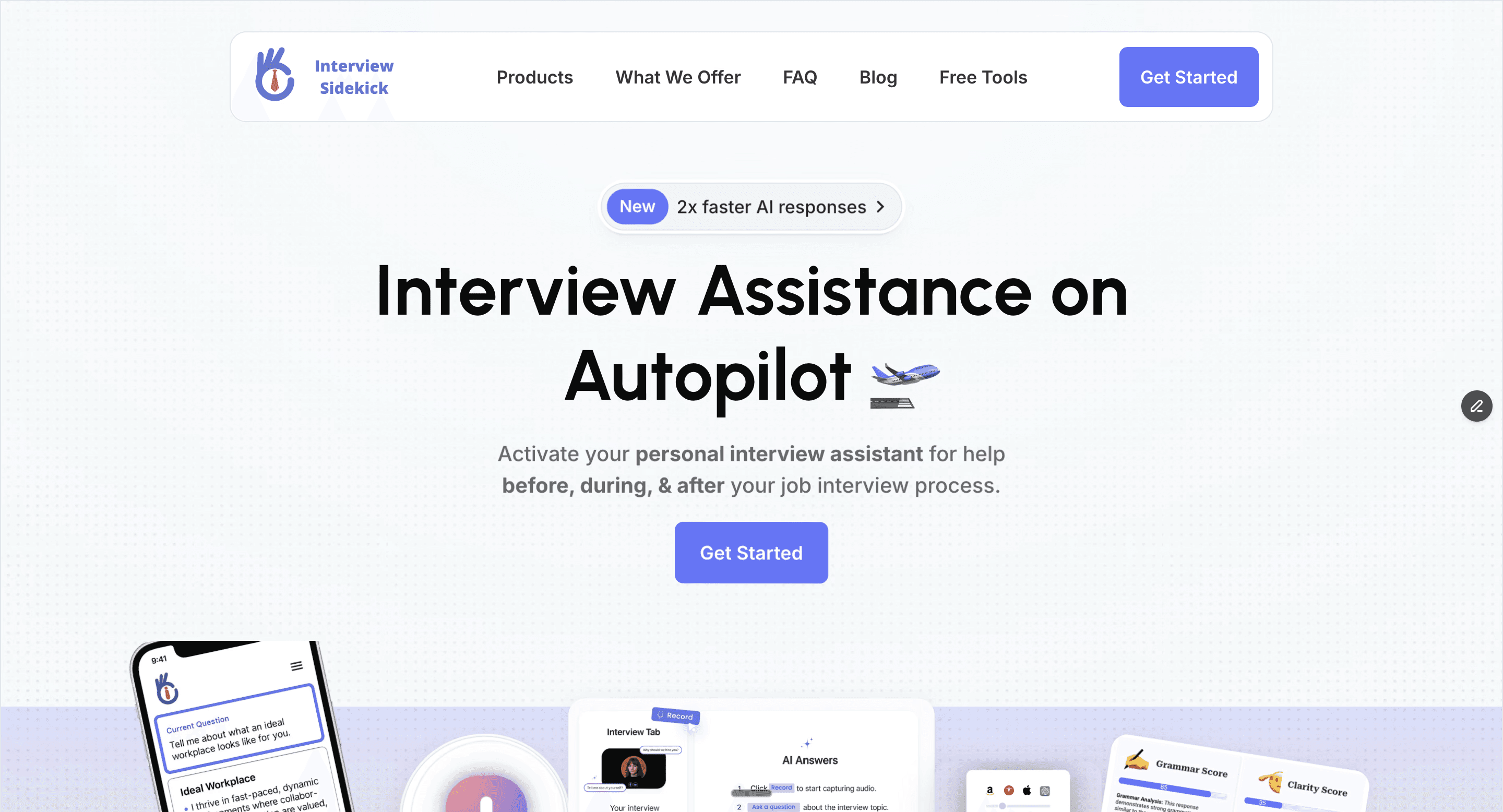
Interview Sidekick provides real-time interview assistance during live interviews, offering structured guidance, prompts, and coaching support without forcing scripted answers.
Best for
Job seekers who want real-time support during actual interviews or high-pressure mock interviews.
Strengths
Strong real-time interview assistance
Voice-based live interview support
Helps structure answers naturally
Useful across behavioral, technical, and role-specific interviews
Limitations
Requires responsible use to avoid over-dependence
Who should choose it
Candidates who want live interview support that enhances thinking rather than replacing it.
Pull-out insight: Real-time structure is most valuable when pressure is highest.
2. Google Interview Warmup
What it does
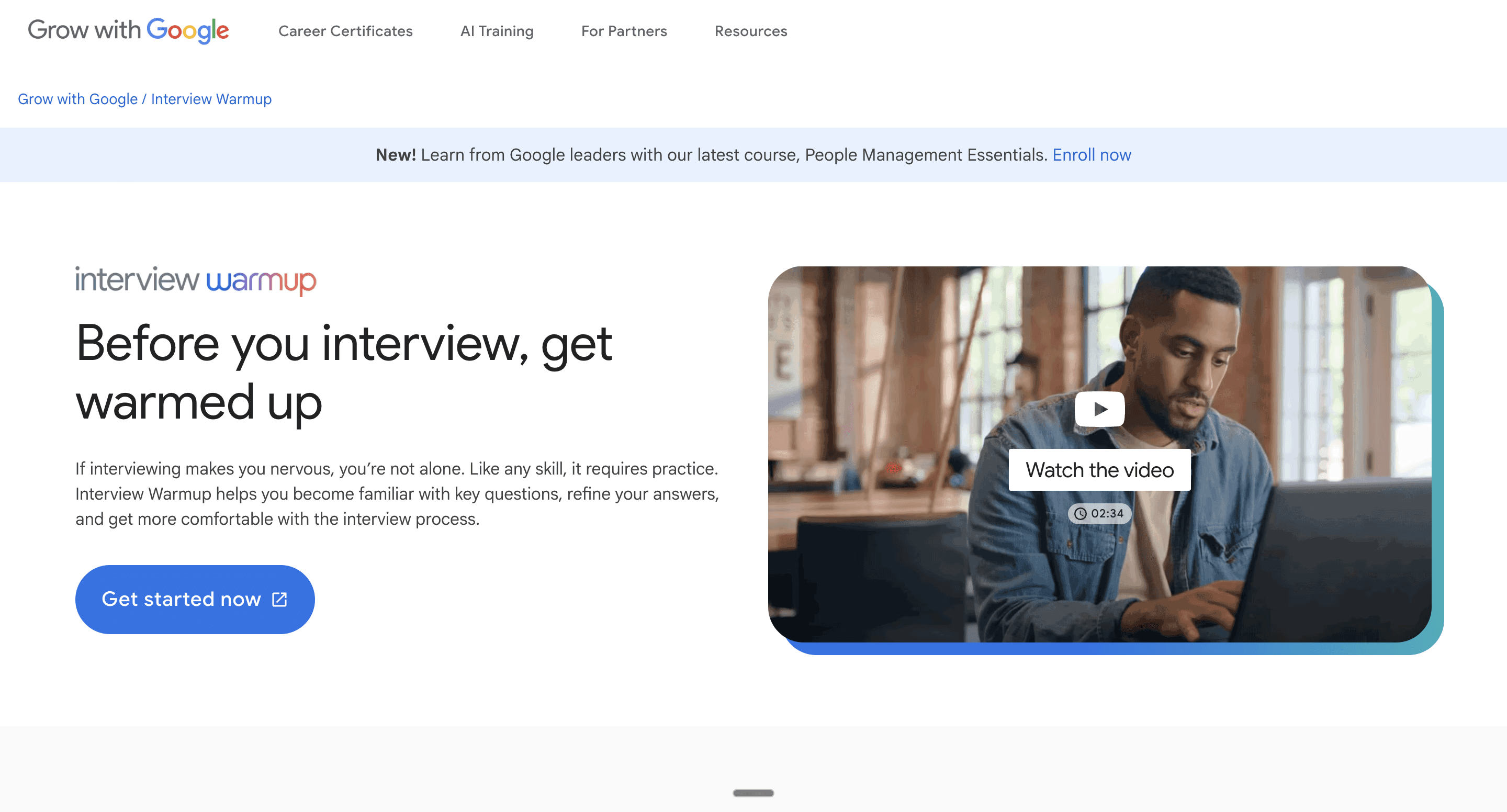
Google Interview Warmup helps candidates practice answering common interview questions and reflect on clarity and wording.
Best for
Freshers and beginners starting interview preparation.
Strengths
Free and easy to use
Good for warming up before interviews
Helpful for practicing basic communication
Limitations
No live interview support
No real-time coaching or feedback
Who should choose it
Candidates who want a free starting point for interview practice.
Pull-out insight: Great for practice, not for live interviews.
Know more about Interview Warmup.
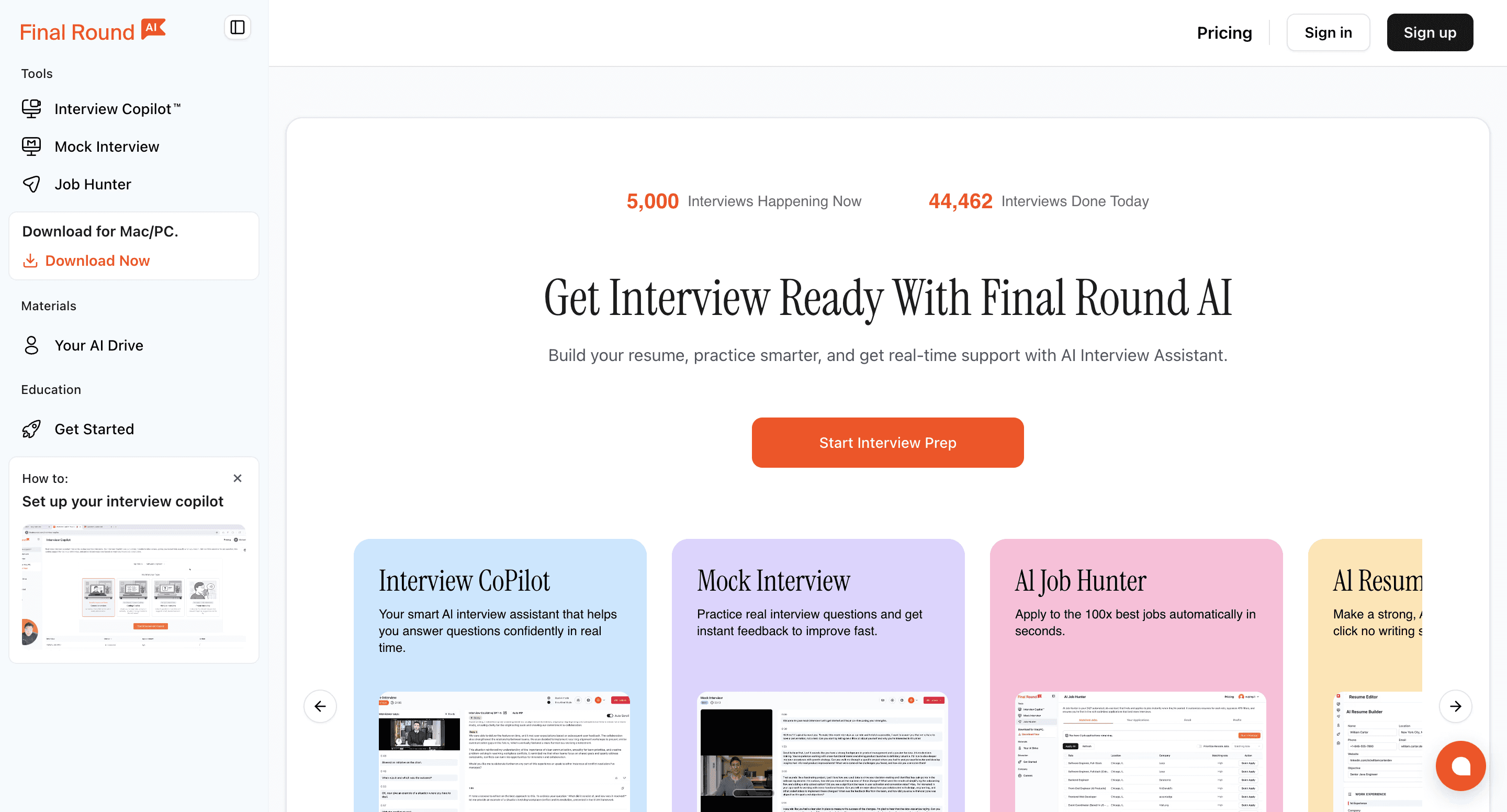
3. Final Round AI
What it does
Final Round AI focuses on structured interview coaching, including strategy, frameworks, and high-stakes interview preparation.
Best for
Candidates interviewing for competitive roles in consulting, product, or leadership.
Strengths
Strong focus on decision-making and structure
Useful for advanced interviews
Offers interview copilot-style guidance
Limitations
Can feel intense for beginners
Who should choose it
Candidates preparing for demanding, high-expectation interviews.
Pull-out insight: Structure matters most when interviews are competitive.
Related:
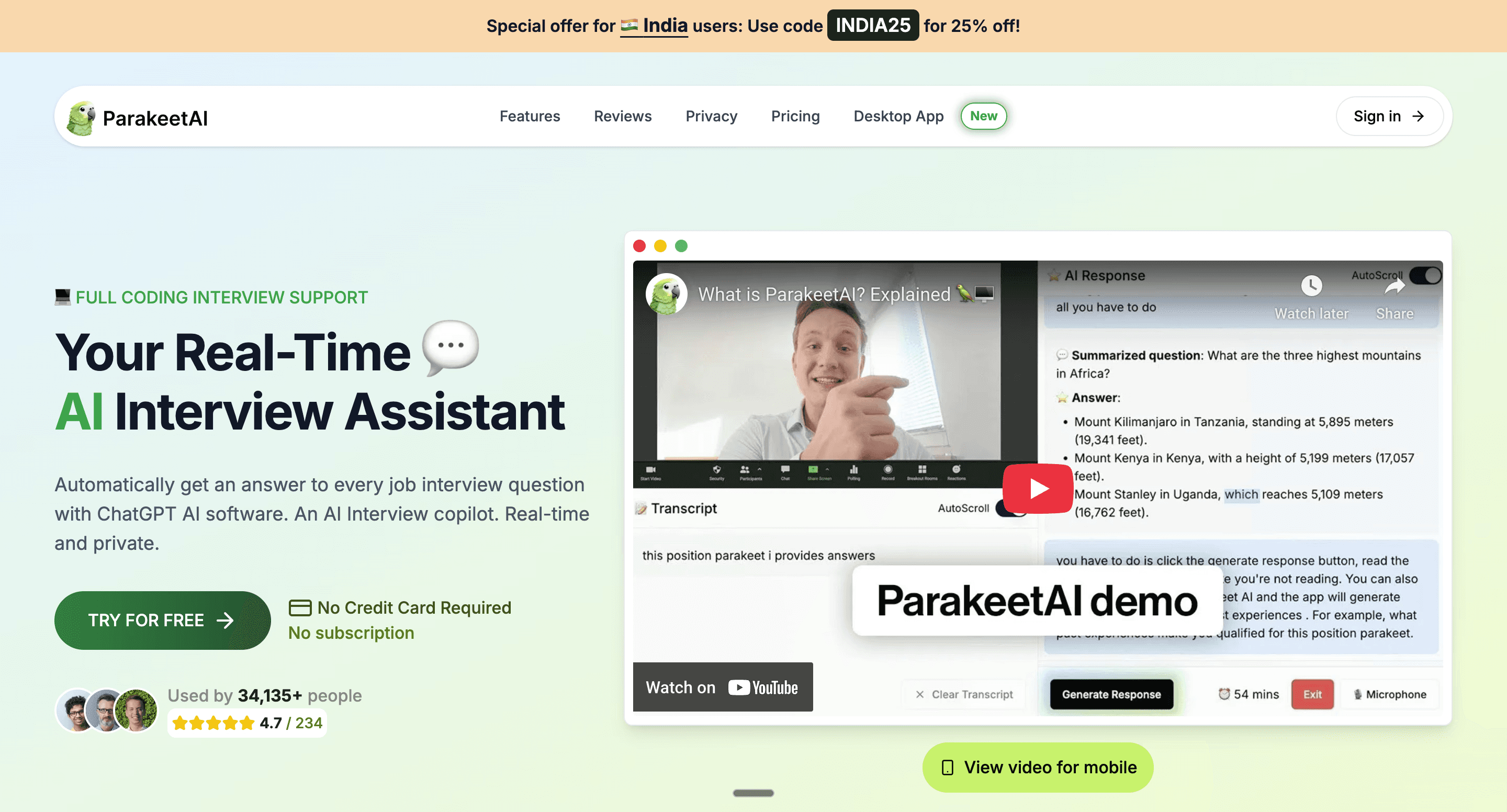
4. Parakeet AI
What it does
Parakeet AI offers live mock interview practice with fast feedback to help candidates improve responses quickly.
Best for
Quick interview practice and repetition.
Strengths
Fast feedback loops
Simple and accessible
Good for frequent practice
Limitations
Limited depth for complex interviews
Who should choose it
Candidates who want frequent, lightweight mock interviews.
Pull-out insight: Repetition builds confidence.
Related:
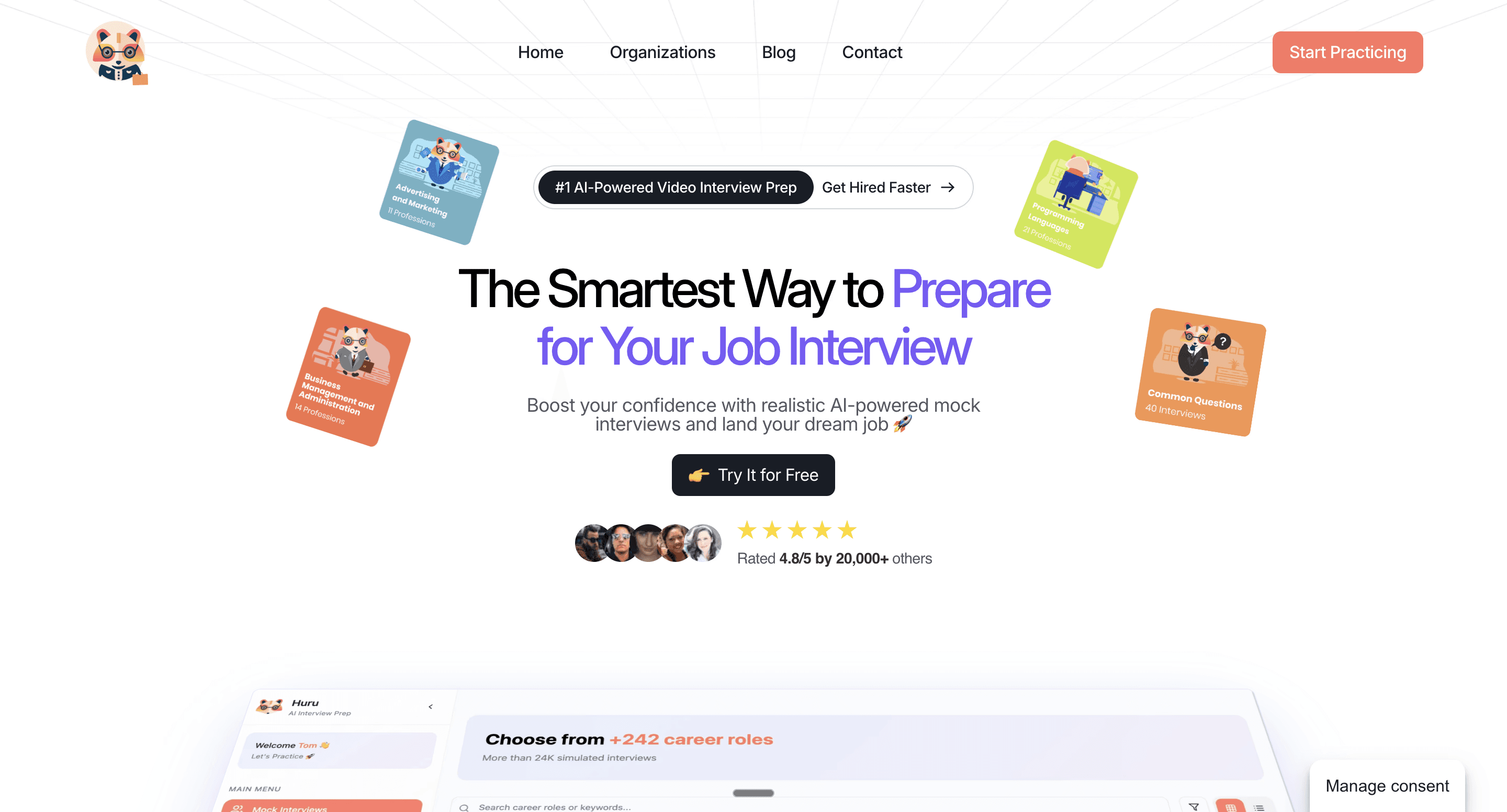
5. Huru
What it does
Huru provides video-based mock interviews to simulate interview pressure and delivery.
Best for
Candidates who want to practice speaking on camera.
Strengths
Video interview simulation
Helps with delivery and presence
Good practice under pressure
Limitations
Not designed for real-time live interview assistance
Who should choose it
Candidates preparing for video or recorded interviews.
Pull-out insight: Seeing yourself speak improves delivery awareness.
Worthy Reads:
6. Interviews Chat
What it does
Interviews Chat simulates interviews through text-based conversations.
Best for
Practicing answer structure and pacing.
Strengths
Good for organizing responses
Useful for behavioral questions
Low-pressure practice environment
Limitations
No voice or live interview support
Who should choose it
Candidates who prefer text-based preparation.
Pull-out insight: Clear structure often matters more than perfect wording.
Worthy Reads:
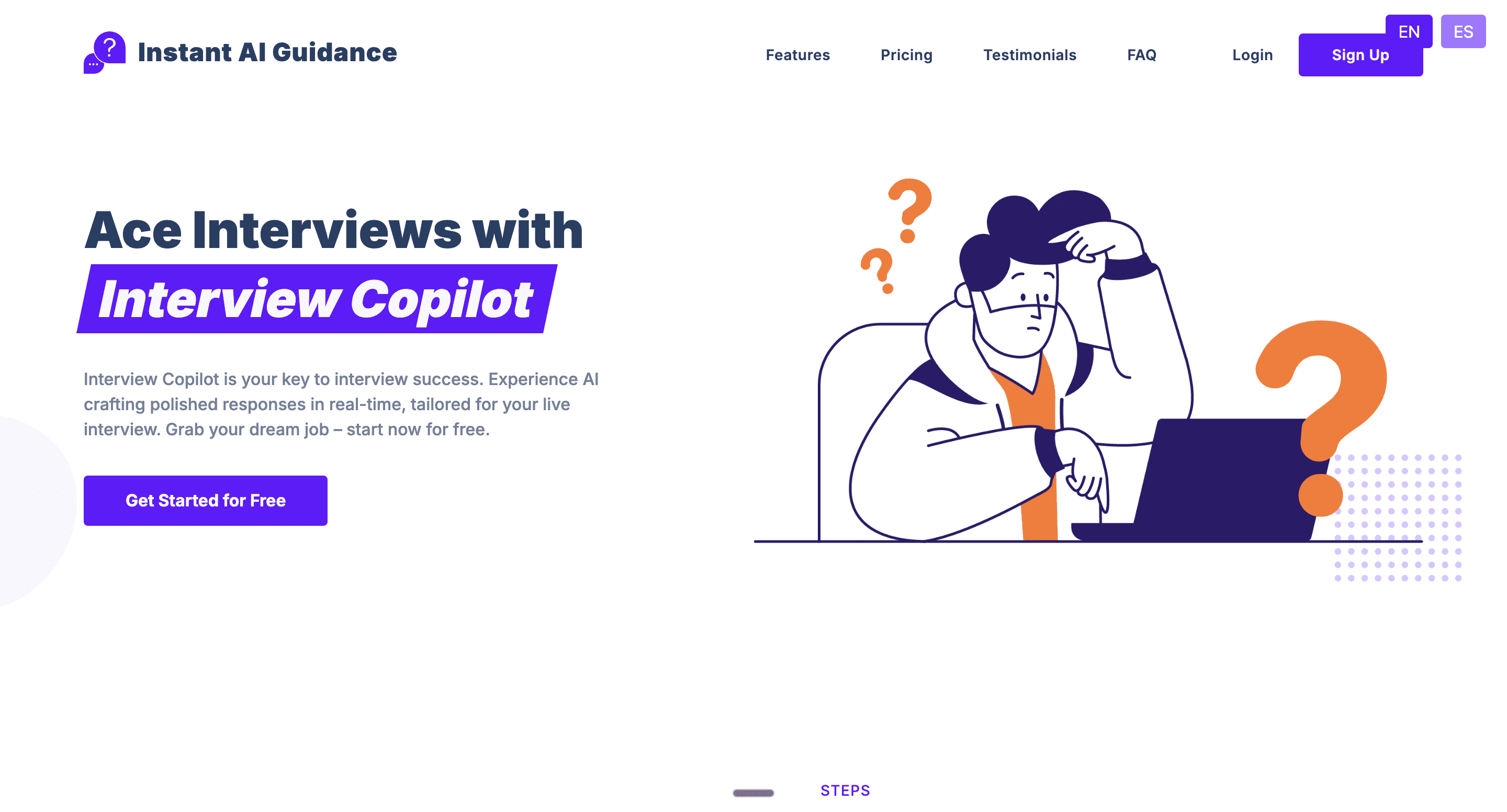
7. Interview Copilot
What it does
Interview Copilot provides real-time guidance during interviews by helping frame answers and maintain structure.
Best for
Candidates who want support during live interviews.
Strengths
Real-time interview assistance
Helpful for framing responses
Supports on-the-spot thinking
Limitations
Requires careful usage to stay authentic
Who should choose it
Candidates comfortable with light real-time guidance.
Pull-out insight: Guidance works best when it stays subtle.
Related:
8. InterviewBee

What it does
InterviewBee focuses on mock interviews and feedback to help candidates improve over time.
Best for
Early-stage preparation and interview practice.
Strengths
Practice-focused
Useful feedback loops
Easy to get started
Limitations
Limited real-time interview support
Who should choose it
Candidates building confidence before live interviews.
Pull-out insight: Preparation reduces anxiety.
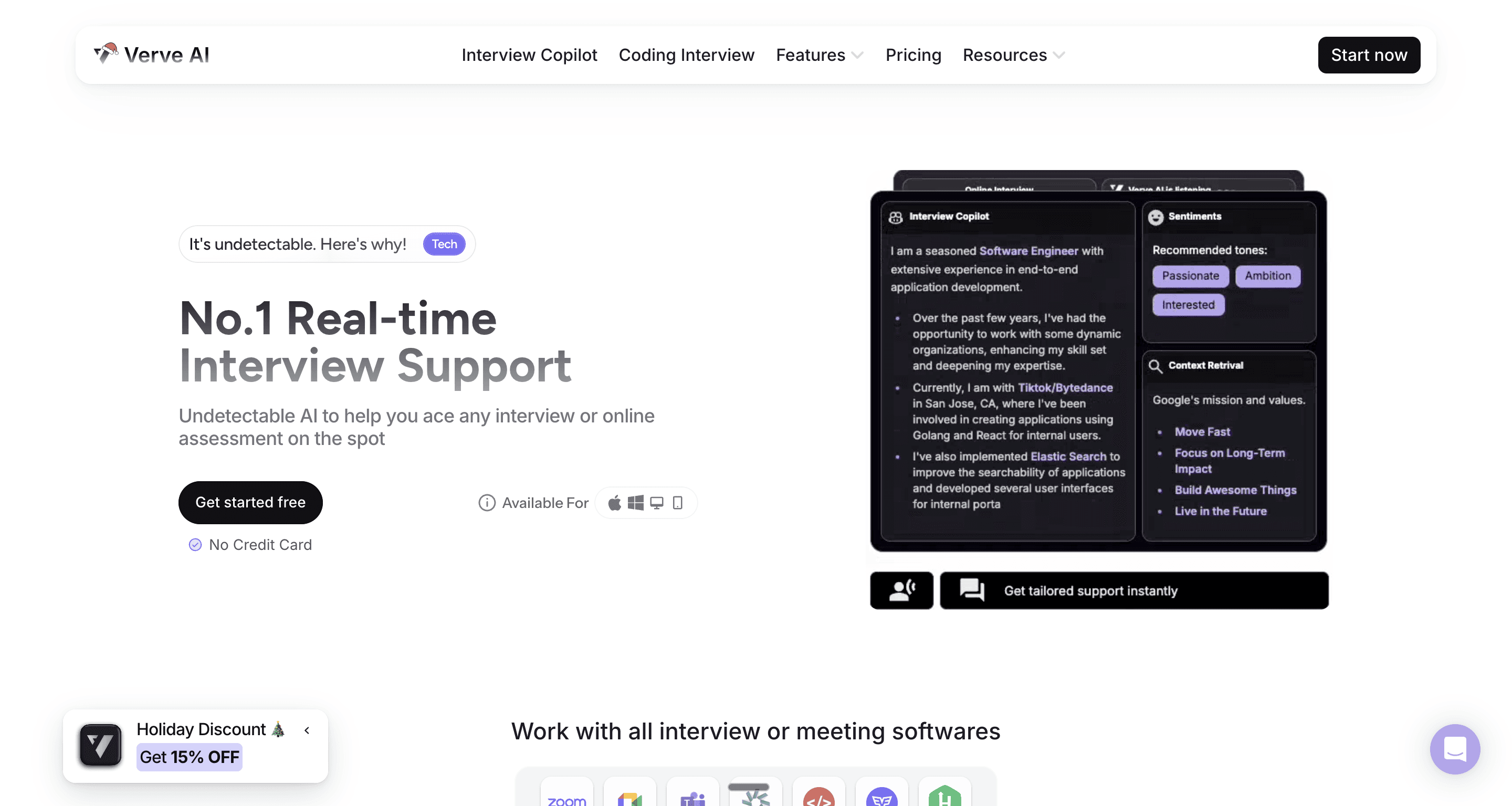
9. Verve AI
What it does
Verve AI helps candidates improve clarity, pacing, and confidence during interviews.
Best for
Candidates focused on communication quality.
Strengths
Strong delivery coaching
Focus on clarity and confidence
Useful for behavioral interviews
Limitations
Less role-specific depth
Who should choose it
Candidates who struggle with verbal delivery.
Pull-out insight: How you speak matters as much as what you say.
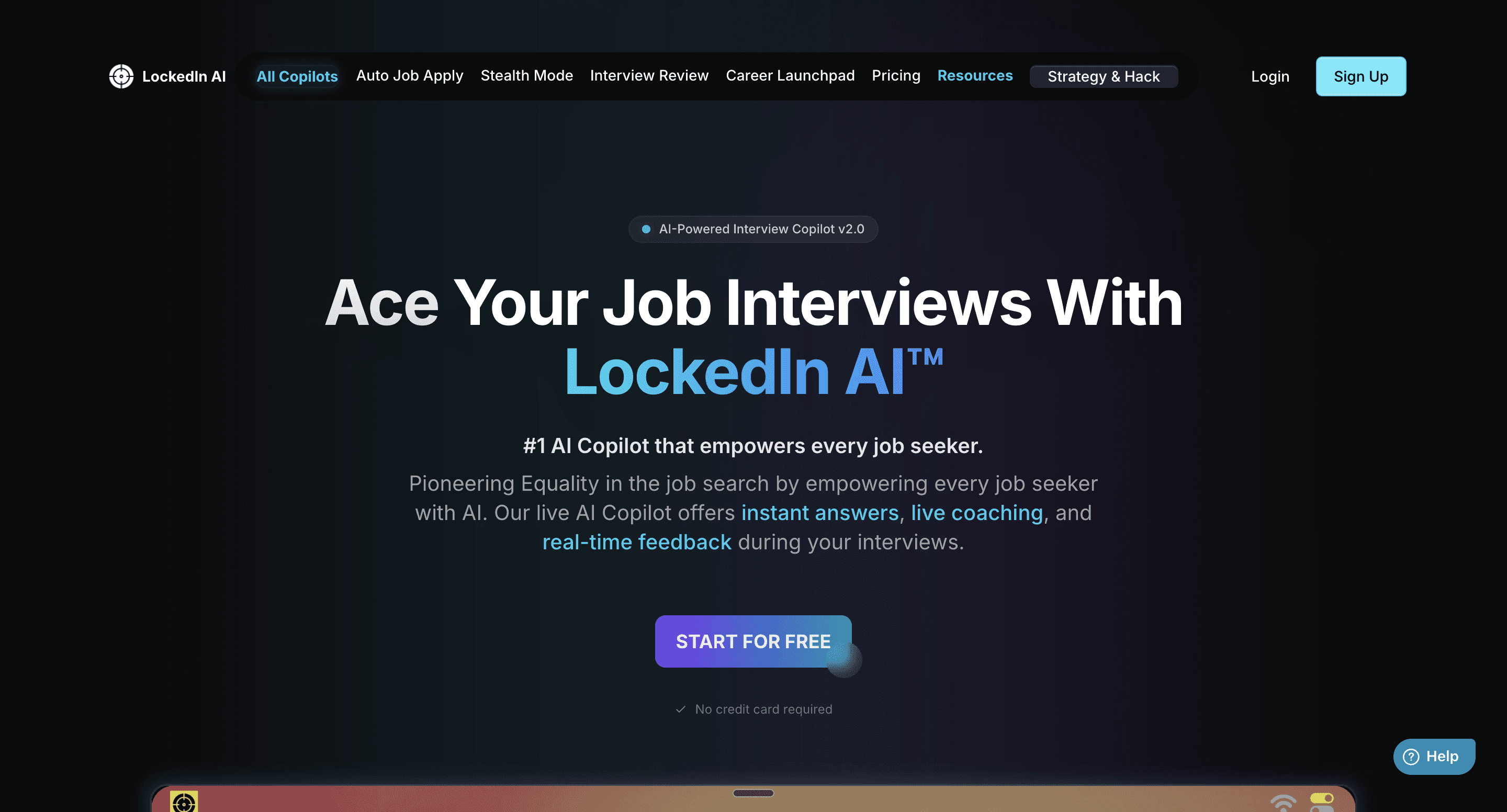
10. LockedIn
What it does
LockedIn provides structured interview coaching with guided improvement paths.
Best for
Candidates who prefer step-by-step improvement.
Strengths
Clear progression paths
Structured coaching approach
Helpful for consistency
Limitations
Less flexible for last-minute interviews
Who should choose it
Candidates who want guided, long-term improvement.
Pull-out insight: Consistency builds confidence.
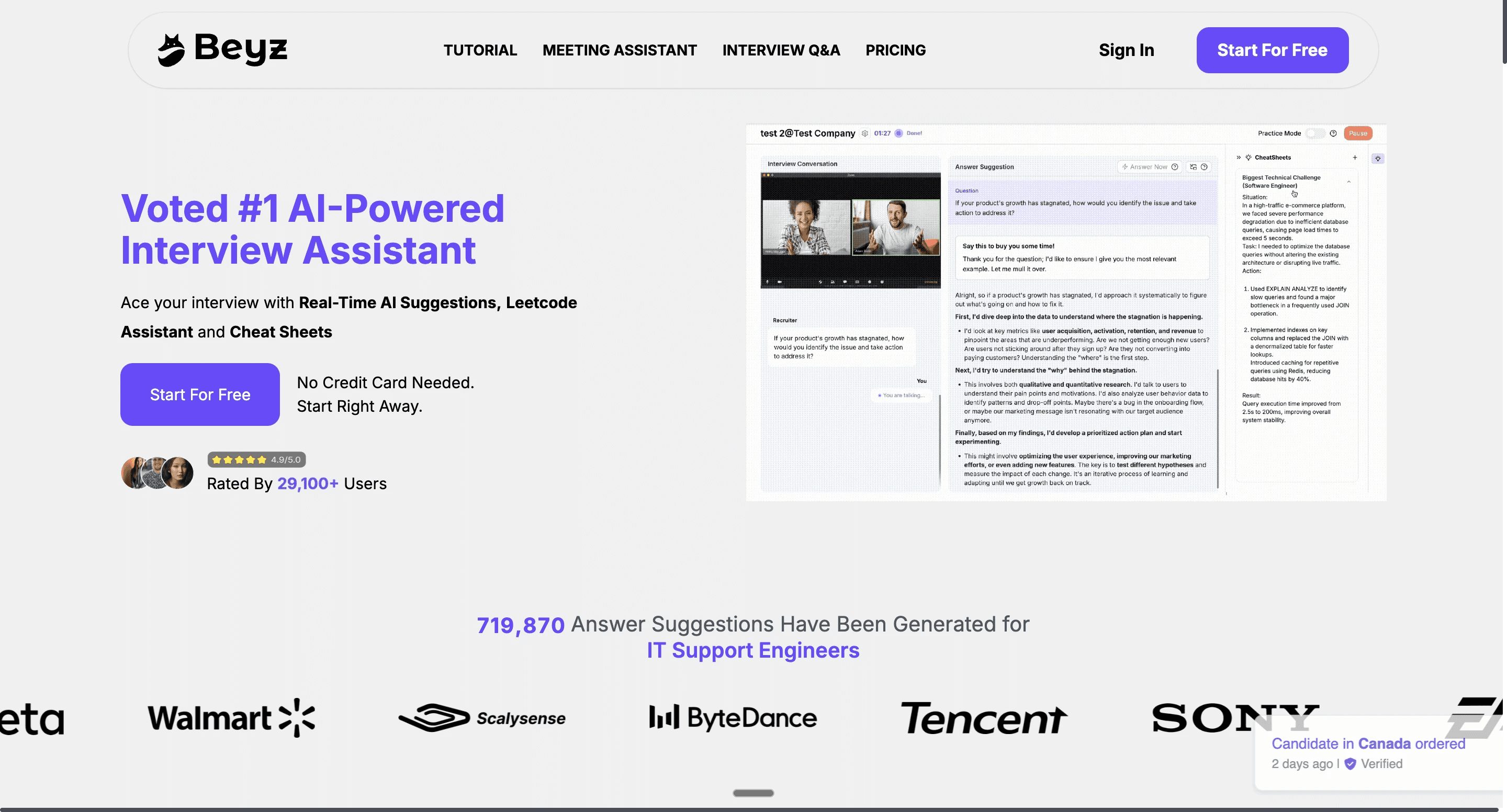
11. Beyz
What it does
Beyz offers reflective feedback and guided analysis after interview practice.
Best for
Candidates who want detailed written feedback.
Strengths
Thoughtful feedback
Encourages self-reflection
Useful for behavioral interviews
Limitations
Not designed for real-time interviews
Who should choose it
Candidates who learn best through reflection.
Pull-out insight: Reflection turns practice into progress.
12. Interviews by AI
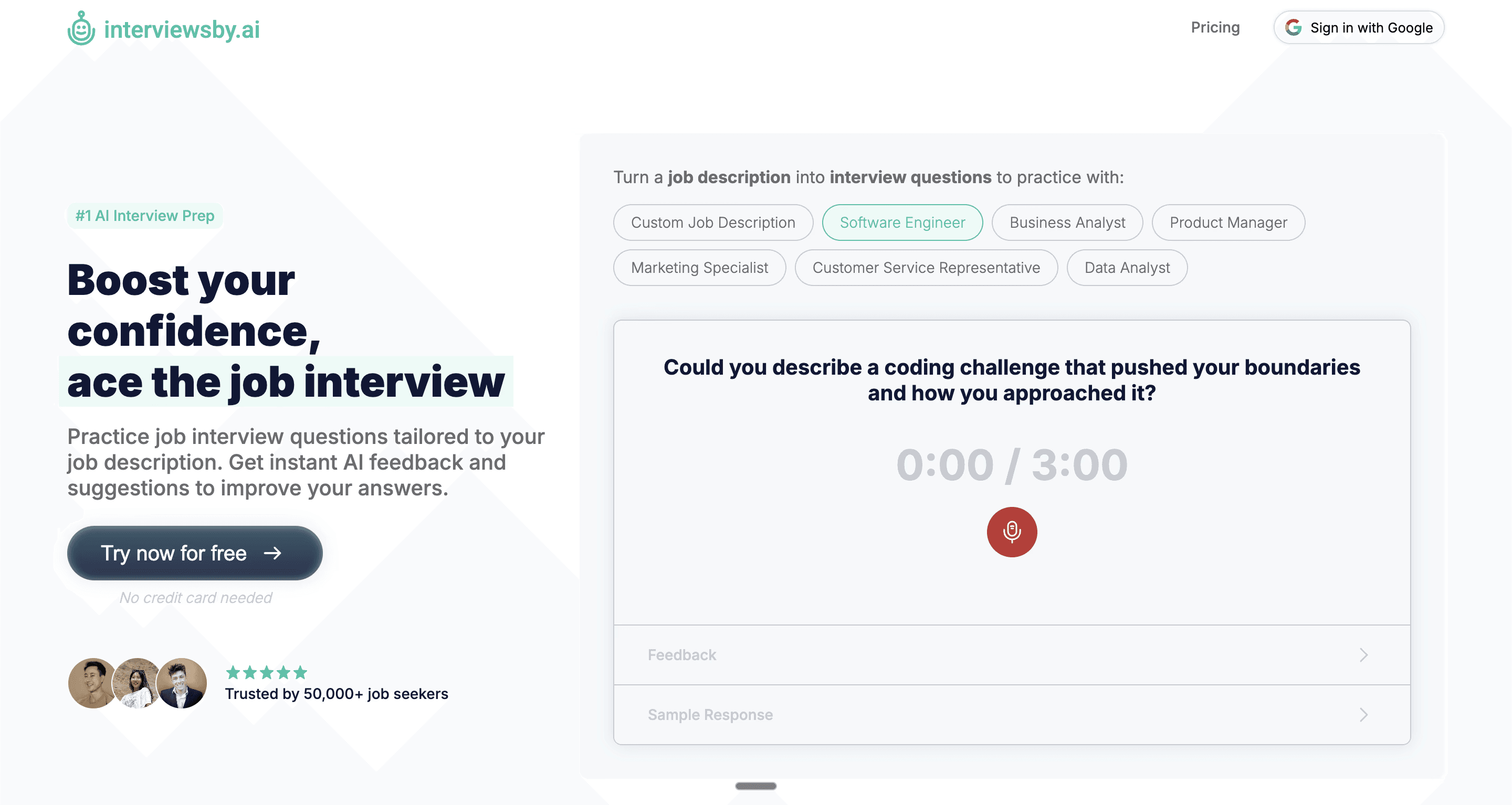
What it does
Interviews by AI provides guided interview simulations for practice and recall.
Best for
General interview preparation.
Strengths
Interview simulations
Helpful for recall and structure
Easy to use
Limitations
Limited real-time coaching
Who should choose it
Candidates looking for broad interview practice.
Pull-out insight: Simulation prepares you for unpredictability.
Role-Specific Recommendations
Different roles demand different interview styles. Choosing the right AI tool for live interviews or interview practice becomes easier when you match the tool to how your interviews actually work.
Software engineers
Engineering interviews often move quickly between problem-solving, explanation, and follow-up questions. Tools that support real-time structure and technical clarity work best.
What to look for:
Real-time interview assistance during live technical discussions
Help explaining reasoning clearly
Support for system design and problem breakdown
Helpful tools: Interview Sidekick, Final Round AI, Interviews by AI
Related
Software Engineer Interview Questions
How to Prepare for a Software Engineering Role
Software Engineer Full Roadmap
Product managers
Product interviews test structured thinking, prioritization, and communication under pressure. Candidates need to explain trade-offs clearly and respond thoughtfully to follow-ups.
What to look for:
Real-time coaching for structured answers
Help organizing thoughts during strategy questions
Behavioral and situational guidance
Helpful tools: Interview Sidekick, Final Round AI, Verve AI
Related:
Technical Product Manager Full Roadmap
Product Manager Interview Questions
Designers
Design interviews focus on storytelling, portfolio walkthroughs, and critique discussions. Delivery and clarity matter as much as the work itself.
What to look for:
Practice tools that improve communication flow
Feedback on clarity and explanation
Mock interviews that simulate presentation scenarios
Helpful tools: Huru, Verve AI, Interviews Chat
Related:
Graphic Designer Interview Question Generator
Sales and client-facing roles
Sales interviews are conversational and often include role-play, objection handling, and persuasion. Candidates must think on their feet while maintaining confidence.
What to look for:
Live interview assistance for fast responses
Practice with conversational flow
Coaching on clarity and confidence
Helpful tools: Interview Sidekick, Interview Copilot, Parakeet AI
Freshers and entry-level candidates
Entry-level interviews focus on communication, attitude, and basic understanding. Confidence and clarity are often bigger challenges than knowledge.
What to look for:
Mock interview practice
Simple feedback and coaching
Low-pressure environments
Helpful tools: Google Interview Warmup, InterviewBee, Interviews Chat
Pro Tip
Choose tools that match how your interviews actually feel.
Practicing in the wrong format can be just as unhelpful as not practicing at all.
How to Choose the Right AI Tool for Live Interviews
Not every interview tool is designed for live situations. Choosing the right one depends on how your interviews are run and what kind of support you actually need during the conversation.
Live assistance vs practice only
Some tools are built to support you during a live interview, while others are meant only for preparation. If your biggest challenge is thinking clearly under pressure, live interview assistance can help. If you need to improve answers and delivery beforehand, practice-focused tools may be enough.
Voice vs text format
Live interviews are usually spoken. Tools that work alongside voice-based interviews are more helpful for real-time situations. Text-based tools are better suited for preparation, reflection, and structuring answers ahead of time.
Realism vs coaching depth
Highly realistic tools simulate fast-paced conversations, while coaching-focused tools provide deeper guidance and feedback. Choose realism if your interviews feel intense and unpredictable. Choose coaching depth if you are still building confidence and structure.
Time before interview
If your interview is soon, tools with real-time guidance or quick mock interviews can help you stay composed. If you have more time, longer practice cycles and structured feedback lead to better long-term improvement.
Comfort with guidance
Some candidates prefer subtle prompts, while others want more detailed coaching. Choose a tool that matches your comfort level so it supports your thinking instead of distracting you.
“Good tools support thinking, not replace it.”
FAQ
What are the best AI tools for live interviews?
The best AI tools for live interviews are those that offer real-time assistance without disrupting conversation. Tools like Interview Sidekick, Final Round AI, Interview Copilot, and Verve AI are commonly used for live interview support.
Are AI tools allowed during live interviews?
Policies vary by company and interview format. Preparation and mock interviews are widely accepted. Live assistance should be used responsibly and only when it aligns with interview expectations.
Do live interview tools replace mock interview practice?
No. Live interview tools help with performance under pressure, while mock interviews help build skills. Most candidates benefit from using both.
Which tools are best for freshers?
Freshers often benefit most from mock interview tools and simple feedback. Google Interview Warmup, InterviewBee, and Interviews Chat are good starting points.
Which tools are best for technical interviews?
For technical roles, tools that support structured thinking and explanation are helpful. Interview Sidekick, Final Round AI, and Interviews by AI work well for these scenarios.
Can recruiters detect AI assistance?
Recruiters notice unnatural or overly polished answers. Tools work best when they help you organize thoughts, not when they generate scripted responses.
How many mock interviews should I do before a real one?
Most candidates benefit from 5 to 10 focused mock interviews per role, combined with reviewing feedback and improving specific weak areas.
Is it risky to rely too much on live interview tools?
Yes. Over-reliance can affect authenticity. The goal is to improve clarity and confidence, not to outsource thinking.
Conclusion
Live interviews in 2026 demand clarity, confidence, and adaptability. AI tools for live interviews and real-time interview assistance can help job seekers perform better when used thoughtfully, especially in high-pressure situations where thinking clearly is the biggest challenge.
The most effective candidates combine preparation with performance support. Mock interviews help build skills, while live assistance helps execute those skills during real conversations. No tool replaces preparation, but the right tool can reduce anxiety, improve structure, and support better communication.
Whether you choose Interview Sidekick for real-time coaching, Final Round AI for structured decision-making, or mock interview tools like Huru and Parakeet AI for practice, the key is alignment. Choose tools that match how your interviews actually feel and use them to support your own understanding.
Strong interviews are not about perfect answers. They are about clear thinking, honest communication, and confidence under pressure.
Turnfailed interviews
into offers accepted
No credit card required • Cancel anytime