Best AI for Interview Preparation 2026: 10 Tested (Honest Verdict)
 Rishabh Jain5 min read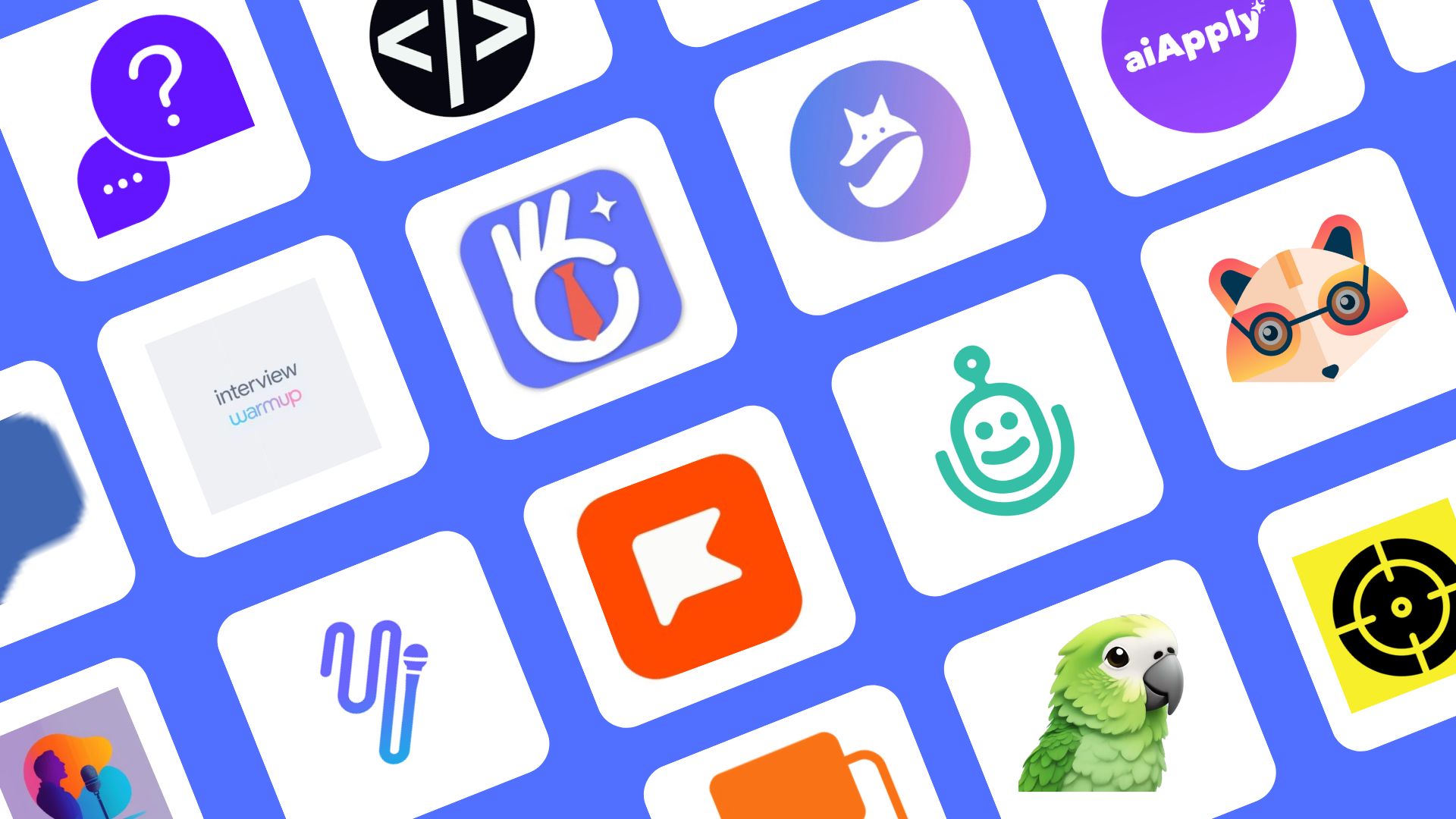
On this page
- TL;DR
- Direct List of Best AI Interview Prep Tools
- Why AI Interview Prep Tools Matter in 2026
- What Makes a Great AI Interview Prep Tool in 2…
- Best AI Interview Prep Tools Full Comparison (…
- Best AI Interview Prep Tools in 2026
- Role-Specific Recommendations
- How to Choose the Right AI Interview Prep Tool
- FAQ
- Conclusion
TL;DR
Interview preparation has changed dramatically in 2026. The best interview prep tools now offer realistic conversation practice, voice-based simulations, structured behavioral coaching, and performance insights that help candidates refine confidence, clarity, and storytelling. Whether you're preparing for technical roles, product interviews, design critiques, sales conversations, or entry-level behavioral rounds, these tools help you practice the way modern employers evaluate talent.
This guide reviews the 10 best interview prep tools in 2026 and compares them across realism, feedback style, scoring, role-specific content, and pricing. You’ll find the top options for software engineers, product managers, designers, sales professionals, freshers, and career switchers-plus the best free tools, the best tools for last-minute prep, and the most complete all-around preparation platforms.
If you want a quick breakdown:
Interview Sidekick offers the most balanced prep experience with realistic simulation, voice practice, and structured coaching.
Google Interview Warmup is the best free warmup tool.
Yoodli shines for communication and delivery.
Final Round AI is strong for strategy-heavy and competitive roles.
Parakeet AI, Huru, and Interviews Chat are great for quick practice sessions.
Use this guide to choose the tool that matches your interview style, your role, and the time you have before your next opportunity.
Direct List of Best AI Interview Prep Tools
1. Interview Sidekick
A realtime AI interview assistant that helps candidates practice with natural voice conversations, structured coaching, and role-specific questions. Ideal for anyone wanting a lifelike interview prep experience with clarity and delivery feedback.
2. Google Interview Warmup
A free and beginner-friendly interview prep tool that analyzes your spoken or typed responses and highlights themes, phrasing patterns, and confidence signals. Great for warming up, reflecting, and improving clarity.
3. Interviews by AI
A flexible interview prep platform that tailors each practice session to your job description and industry. Strong for quick, targeted rehearsals when you need personalized interview questions fast.
4. Interview Prep AI
A rapid interview practice tool offering structured question flows and guided preparation for common interview topics. Useful for last-minute preparation or refreshing your interviewing instincts.
5. Huru
A video-based mock interview prep app that generates questions and gives short feedback summaries. Works well for quick drills and everyday practice sessions.
6. Interviews Chat
A text-first interview prep helper that simulates conversational Q&A and helps improve answer structure and pacing. Ideal for candidates who prefer typing before moving to voice practice.
7. Yoodli
A communication and speech improvement tool that analyzes delivery, filler words, pacing, clarity, and confidence. Strong for candidates who want better verbal storytelling and smoother delivery.
8. AiApply
A straightforward interview prep tool that generates practice questions and answer support for general roles. Good for warming up or rehearsing basic interview topics.
9. Final Round AI
A prep platform designed for competitive, strategy-heavy interviews with deep question sets. Great for PMs, business roles, consulting paths, and candidates needing structured frameworks.
10. Parakeet AI
A fast interview practice app that offers quick voice drills, instant feedback, and confidence-building exercises. Perfect for daily repetition and short practice sessions.
Why AI Interview Prep Tools Matter in 2026
Interviewing in 2026 looks very different from just a few years ago. Companies now expect candidates to communicate clearly, think out loud, show structured reasoning, and adapt to follow-up questions with confidence. As a result, more job seekers are turning to AI interview prep tools to practice the exact skills modern employers evaluate.
One of the biggest shifts this year is the move toward structured, conversational preparation. Instead of memorizing answers, candidates want practice tools that help them rehearse real dialogue, refine delivery, and build the muscle memory needed for thoughtful, natural responses.
At the same time, voice-based practice and real-time feedback have become essential. These features help candidates work on pacing, clarity, filler words, and overall communication-areas that can make or break a live interview. Behavioral storytelling has also become a major focus, especially for roles where decision-making and situational judgment matter.
The reason is simple: employers expect more. Hiring managers now look for candidates who can articulate their thought process, structure answers clearly, and communicate with confidence across technical, behavioral, and cross-functional interviews.
In short:
AI interview prep tools are digital platforms that help candidates rehearse interviews through structured practice, guided questions, and performance insights.
What Makes a Great AI Interview Prep Tool in 2026?
The best AI interview prep tools in 2026 do far more than ask questions. They simulate realistic conversations, analyze how you speak, help you structure your answers, and guide you toward clearer, stronger communication. Whether you're preparing for a technical round, a behavioral interview, or a portfolio walkthrough, the right tool should feel like practicing with a knowledgeable coach.
Core Qualities of Strong AI Interview Prep Tools
1. Natural conversation flow
The most effective tools mimic the rhythm of a real interview, including follow-up questions, probing, and scenario-based discussion.
2. Voice + text modes
Modern prep requires practicing both speaking and writing. Tools that support voice conversations help candidates improve pacing, tone, and confidence.
3. Behavioral and technical question banks
Great platforms include structured practice for behavioral storytelling as well as role-specific technical scenarios.
4. Real-time insights and clarity coaching
Clear guidance on delivery, filler words, answer structure, and communication style makes a huge difference-especially for high-pressure interviews.
5. Performance analysis and improvement tracking
Top AI interview prep tools offer session summaries, highlights, and trend tracking so candidates can see measurable growth.
6. Beginner vs. advanced practice paths
Freshers need gentle guidance and clarity prompts. Experienced professionals need deeper scenario questions and advanced reasoning practice.
7. Multi-device compatibility
Good tools work seamlessly across mobile, desktop, and browser-so candidates can prepare anywhere.
8. Role-specific content
Strong platforms offer targeted prep for engineering, product management, design, sales, data roles, and more. Tailored content makes practice significantly more relevant.
Best AI Interview Prep Tools Full Comparison (2026)
Tool | Free Version | Best For | Realism Level | Voice Capability | Feedback Depth | Performance Scoring | Behavioral Coaching | Role-Specific Content | Transcript Availability | Difficulty Level | Pricing |
|---|---|---|---|---|---|---|---|---|---|---|---|
Interview Sidekick | Yes (limited free) | Real-time interview assistance & prep | High (realistic practice + live assist) | Voice + text | Detailed insights & coaching | Yes (progress analysis) | Yes | Yes (role-based questions) | Yes (saved transcripts) | Medium-High | Freemium + premium |
Google Interview Warmup | Yes (free) | Beginners & soft skills | Moderate (structured practice) | Voice (transcription) | Basic insights | No | Limited | No | Yes (transcribes answers) | Easy | Free |
Interviews by AI | Yes (free tier) | Tailored job-description interview prep | Moderate (role-tailored questions) | Yes (audio/text) | Instant feedback | Yes (feedback + sample responses) | Yes | Yes (job description-based) | Not specified | Medium | Freemium / Pro |
Interview Prep AI | Yes (free trial credits) | Simulated interview practice | Moderate (simulated scenarios) | Yes | Real-time feedback | Not publicly specified | Yes | General | Not publicly specified | Easy-Medium | Free trial + paid tiers |
Huru | Not clearly free (trial likely) | Mock interview practice | Moderate (text & voice) | Yes | Detailed feedback | Not publicly specified | Yes | Yes (job-specific) | Not specified | Easy-Medium | Paid |
Interviews Chat | Not clearly free | Text + mock interview practice | Moderate | No (text) | Instant analysis & sample answers | Not publicly specified | Yes | Yes | Yes (transcribed & analyzed) | Easy-Medium | Subscription |
Yoodli | Yes (free access available) | Real-time coaching & communication | Moderate-High (roleplays + follow-ups) | Yes (voice) | Detailed speaking insights | Yes (analytics & progress) | Yes | Yes | Yes (speech analytics) | Easy-Medium | Freemium + paid |
AiApply | Yes (free tier) | Tailored question generation | Moderate | Audio/text (input) | Instant feedback | Not publicly specified | Yes | Yes (job description-based) | Not specified | Easy | Paid options |
Final Round AI | Yes (free trials) | Comprehensive interview prep | High (mock + real-time support) | Yes | Real-time feedback | Yes | Yes | Yes (role-specific) | Not clearly specified | Medium-High | Freemium + paid |
Parakeet AI | Yes (free tier) | Quick voice drills & practice | Moderate | Yes (voice) | Immediate response suggestions | Not publicly specified | Yes | General | Not specified | Easy | Freemium + paid |
Notes on Table Categories
Free Version
Interview Sidekick offers a basic free plan with limited interactions.
Google Interview Warmup is fully free with no credit card required.
Interviews by AI provides free trial credits for practice.
Many platforms offer paid upgrades for unlimited access.
Realism Level
Tools with dynamic follow-ups and tailored question workflows rank higher.
Interview Sidekick blends practice simulation and real-time guidance.
Final Round AI provides mock interviews and real-time support.
Voice Capability
Platforms like Google Interview Warmup, Yoodli, Interviews by AI, Interview Prep AI, and Parakeet AI allow spoken practice.
Some tools still focus on text input like Interviews Chat.
Feedback Depth
Yoodli shines with detailed speaking analytics and follow-ups.
Google Warmup gives basic insights, highlighting phrasing and repetition.
Performance Scoring
Tools with analytics dashboards or performance tracking include Interview Sidekick, Yoodli, Interviews by AI, and Final Round AI.
Behavioral Coaching & Role-Specific Content
Interviews by AI uses job descriptions to tailor question sets.
Yoodli offers practice based on roles and follow-up logic.
Interview Sidekick and Final Round AI cover a wide range of scenarios and job types.
Best AI Interview Prep Tools in 2026
1. Interview Sidekick
What it does:
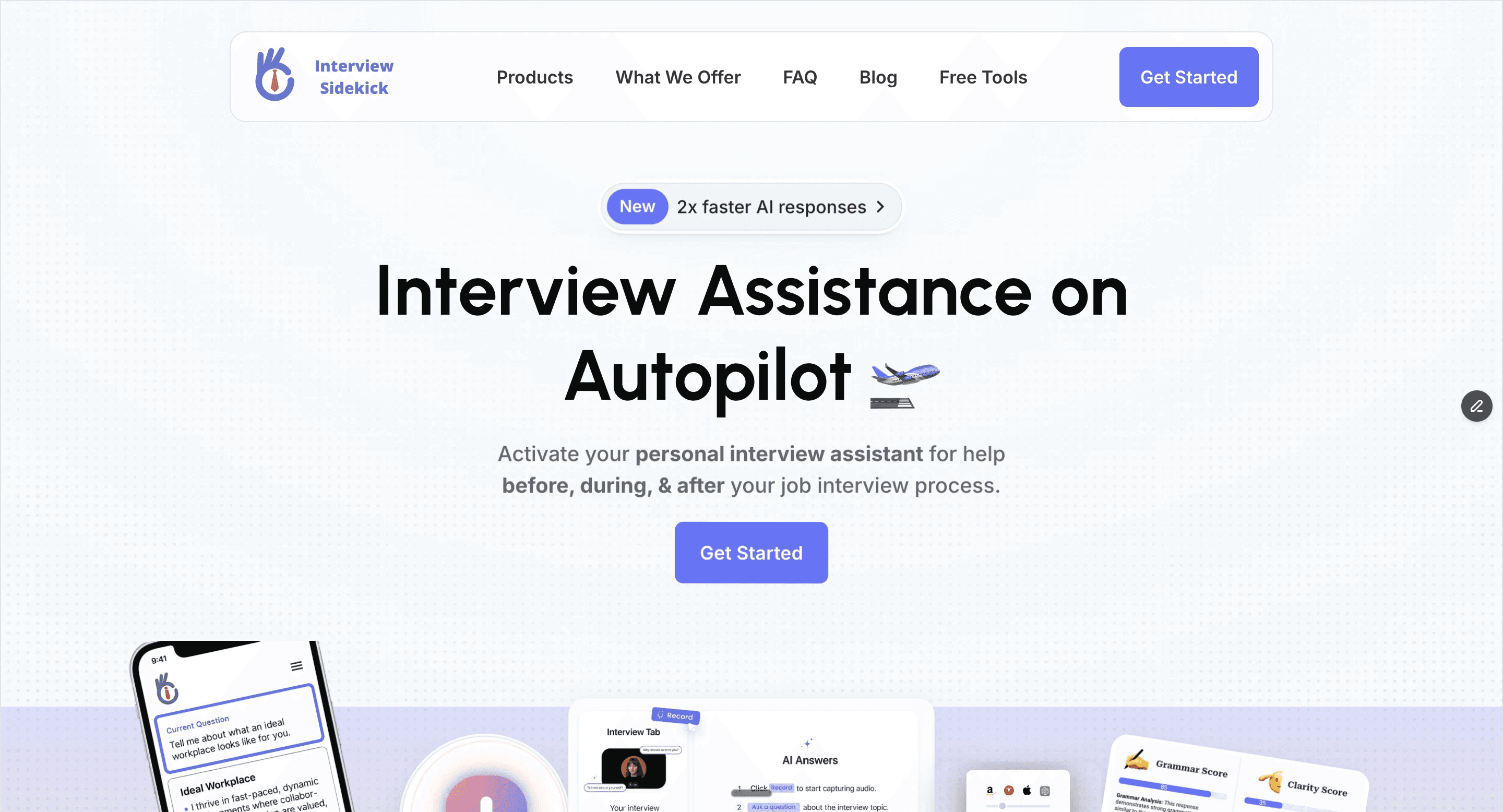
Interview Sidekick is one of the most complete AI interview prep tools available today, offering natural voice and text practice, realistic interview simulation, and structured coaching across behavioral and role-specific scenarios.
Best for:
Candidates who want lifelike interview practice with real-time clarity guidance.
Strengths:
Natural conversation flow (voice + text)
Structured coaching that improves clarity and delivery
Strong role-specific interview tracks
Progress tracking and transcripts
Realistic follow-up questions
Limitations:
Works best with consistent voice input
Deep sessions may feel intense for beginners
Who should choose it:
Anyone preparing for technical, product, design, sales, or behavioral interviews who wants a balanced mix of realism and structured improvement.
If you want one tool that covers structure, delivery, realism, and feedback, Sidekick offers the most complete prep experience without needing multiple apps.
2. Google Interview Warmup
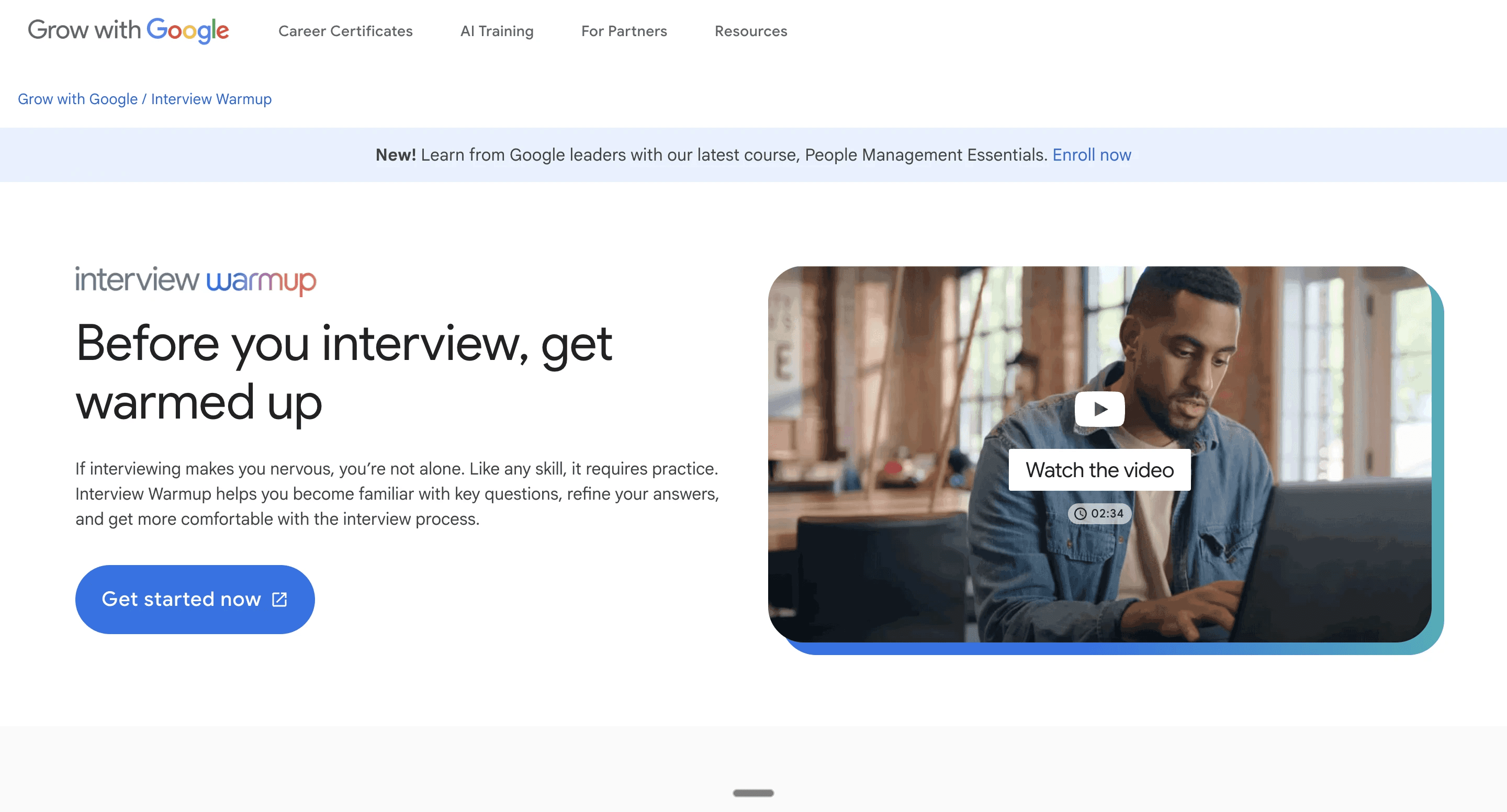
What it does:
A beginner-friendly practice tool that helps candidates warm up by analyzing spoken or typed responses.
Best for:
People just starting their interview prep or needing a low-pressure practice option.
Strengths:
Completely free
Great for clarity and reflection
Simple and intuitive
Limitations:
Not a full simulated interview
No deep behavioral coaching
Limited realism
Who should choose it:
Freshers, nervous speakers, and anyone who needs a gentle starting point before moving to more advanced tools.
Perfect as a warmup tool before shifting into more realistic interview practice.
Learn more about Interview Warmup.
3. Interviews by AI
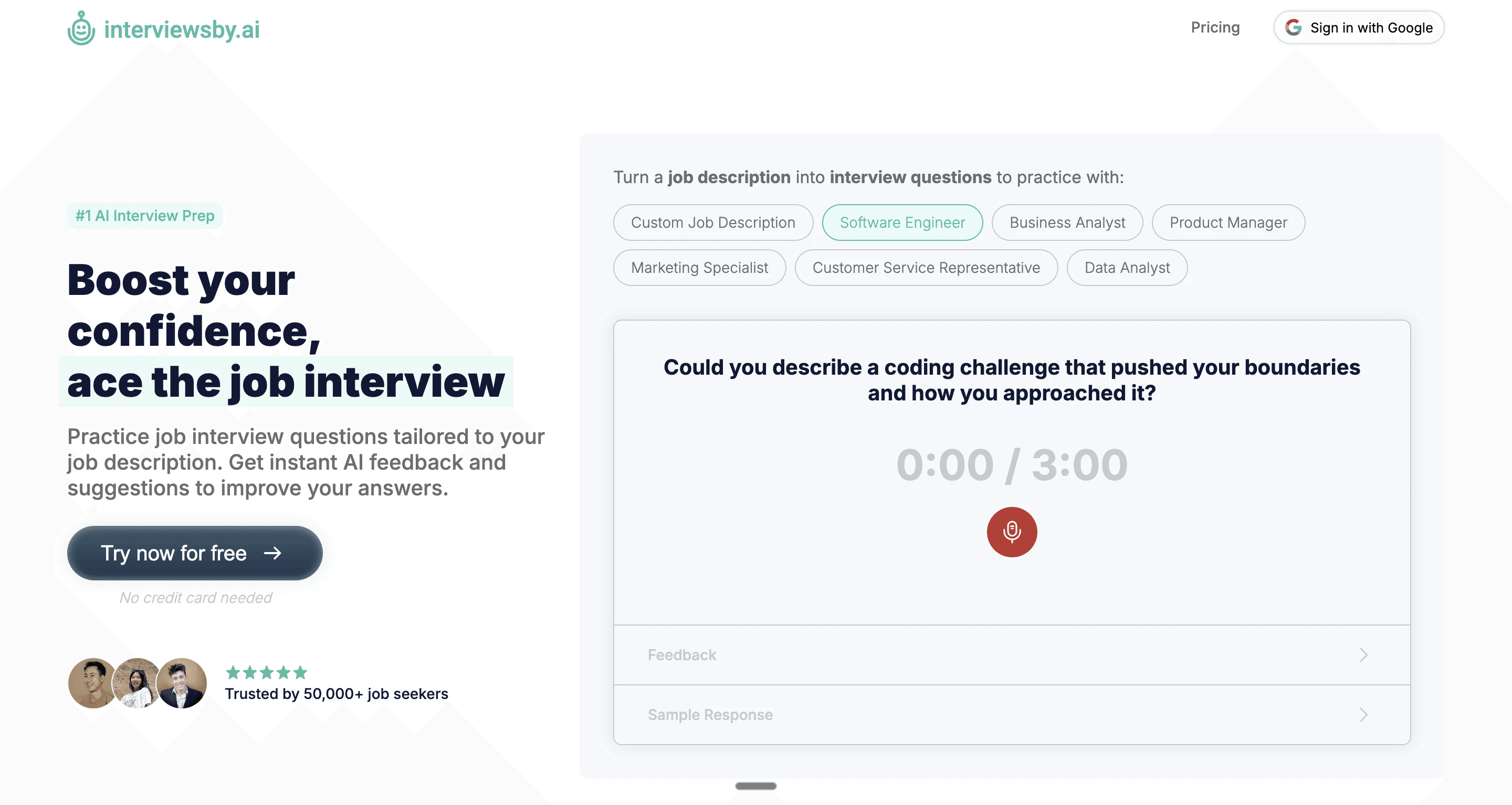
What it does:
Generates interview sessions tailored to your job description, creating targeted question flows that match the role you're applying for.
Best for:
Quick, targeted rehearsals when you want fast role-specific practice.
Strengths:
Custom sessions based on job descriptions
Fast and flexible
Helpful for niche roles
Limitations:
Realism can vary
Feedback is less structured than advanced prep tools
Who should choose it:
Job seekers applying to specialized roles who want instant, tailored interview questions.
Ideal when you have a job description open and want immediate, relevant practice.
4. Interview Prep AI
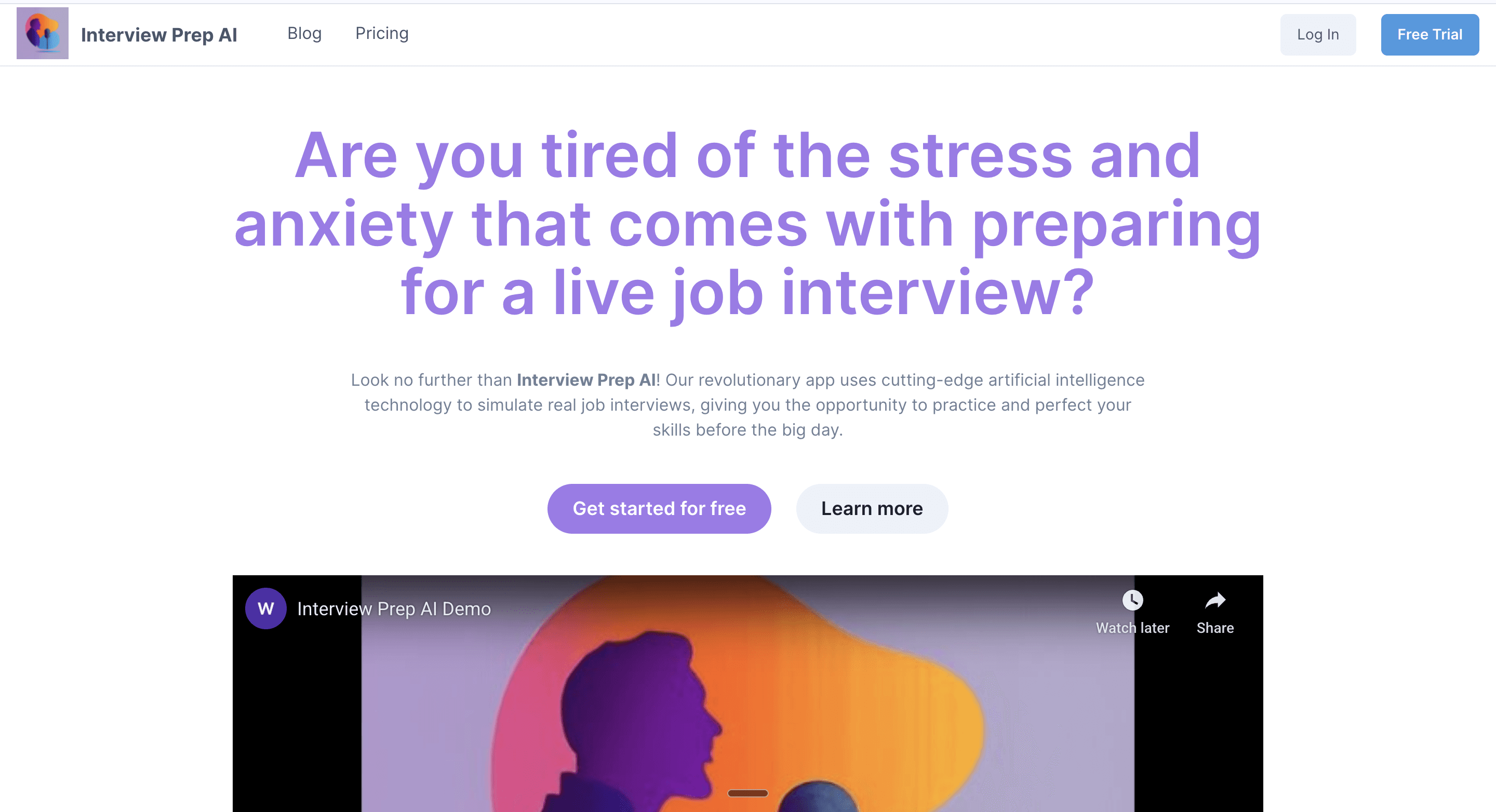
What it does:
Provides structured question flows designed for rapid practice and easy warmups.
Best for:
Last-minute preparation or quick interview refreshers.
Strengths:
Rapid practice cycles
Simple structured flow
Good for squeezing practice into tight schedules
Limitations:
Not as deep as simulation-based tools
Limited analysis features
Who should choose it:
Candidates who want fast, no-frills preparation before interviews.
A reliable pick when you only have 10-20 minutes to prep before a meeting.
Related: Interview Prep AI Alternatives
5. Huru
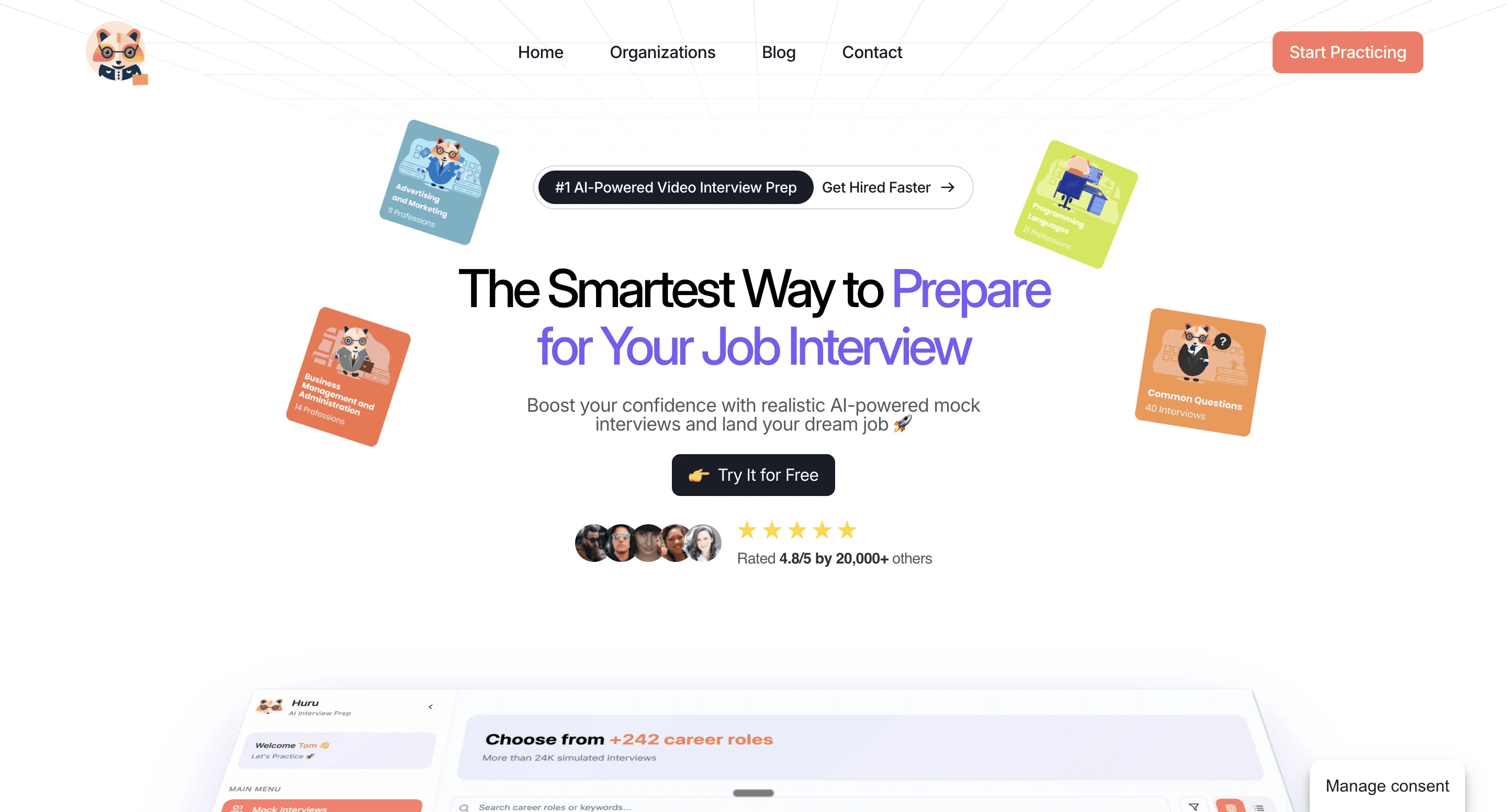
What it does:
A mock interview platform that uses video and voice prompts, then provides quick feedback summaries.
Best for:
Fast interview drills and mid-level practice sessions.
Strengths:
Video-based practice
Moderate feedback
Easy to set up and run
Limitations:
Feedback can feel brief
Simulation depth varies
Who should choose it:
Busy job seekers who want occasional practice without long sessions.
Useful for keeping interview muscles warm without committing to full-length simulations.
Worthy Reads:
6. Interviews Chat
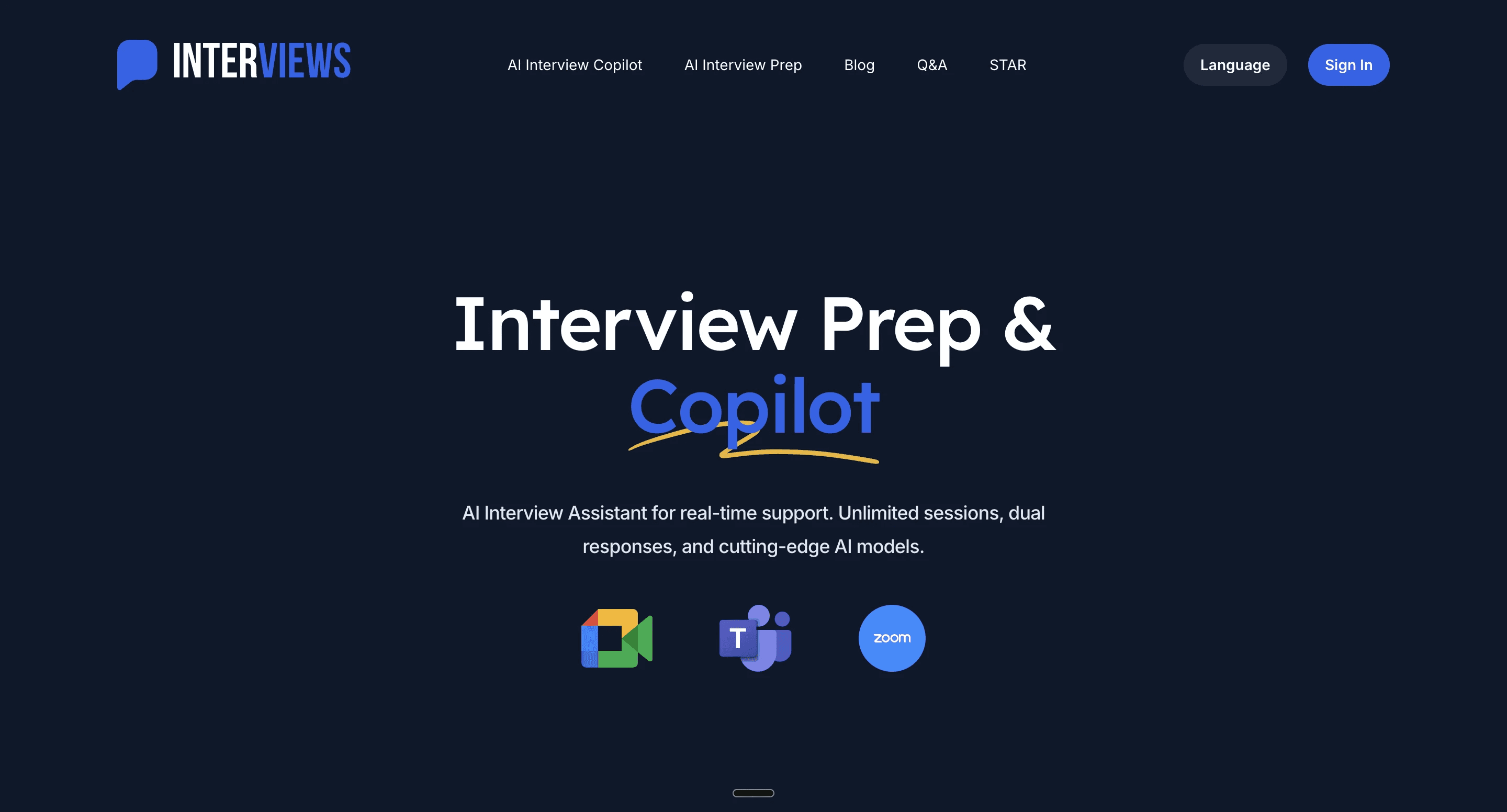
What it does:
A text-first interview practice assistant that simulates Q&A conversations.
Best for:
Candidates who prefer typing or want to refine structure before switching to voice practice.
Strengths:
Easy to use
Helpful for practicing answer structure
Clear content-based analysis
Limitations:
No voice mode
Less realistic than spoken interviews
Who should choose it:
People who like drafting answers or preparing written responses.
Great as an early-step tool to organize your thoughts before moving into voice simulations.
Worthy Reads:
7. Yoodli
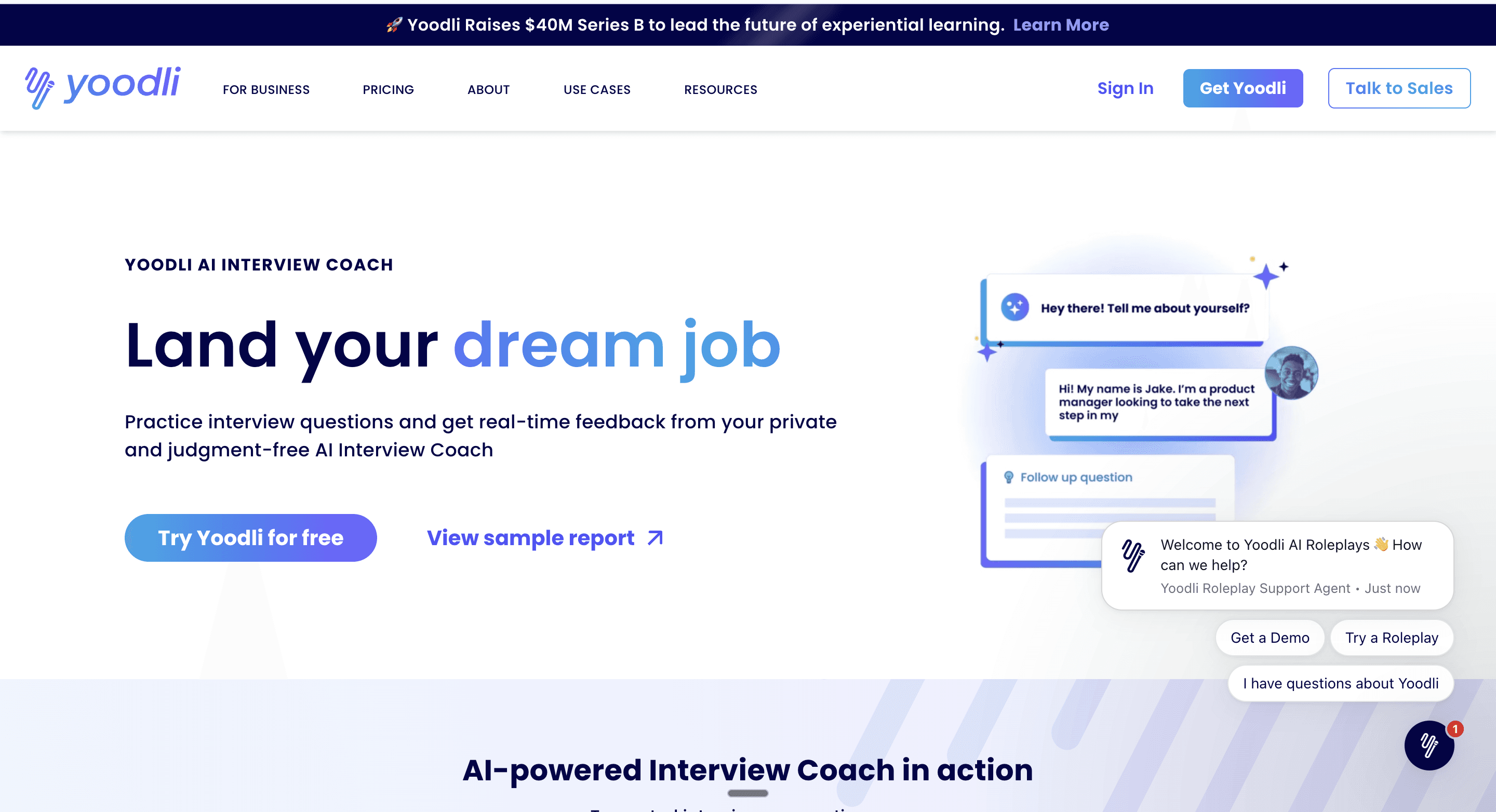
What it does:
A speech and communication coaching platform that gives detailed insights on delivery, filler words, pacing, clarity, and confidence.
Best for:
Candidates who want to improve verbal communication.
Strengths:
Strong speech analysis
Real-time delivery insights
Great for pacing, confidence, tone, and filler word reduction
Limitations:
Not a deep role-specific platform
Focuses more on communication than interview content
Who should choose it:
Anyone who struggles with speaking clearly or confidently in live interviews.
If communication is your weak point, Yoodli is one of the best tools to fix it.
Related: Yoodli Alternatives
8. AiApply
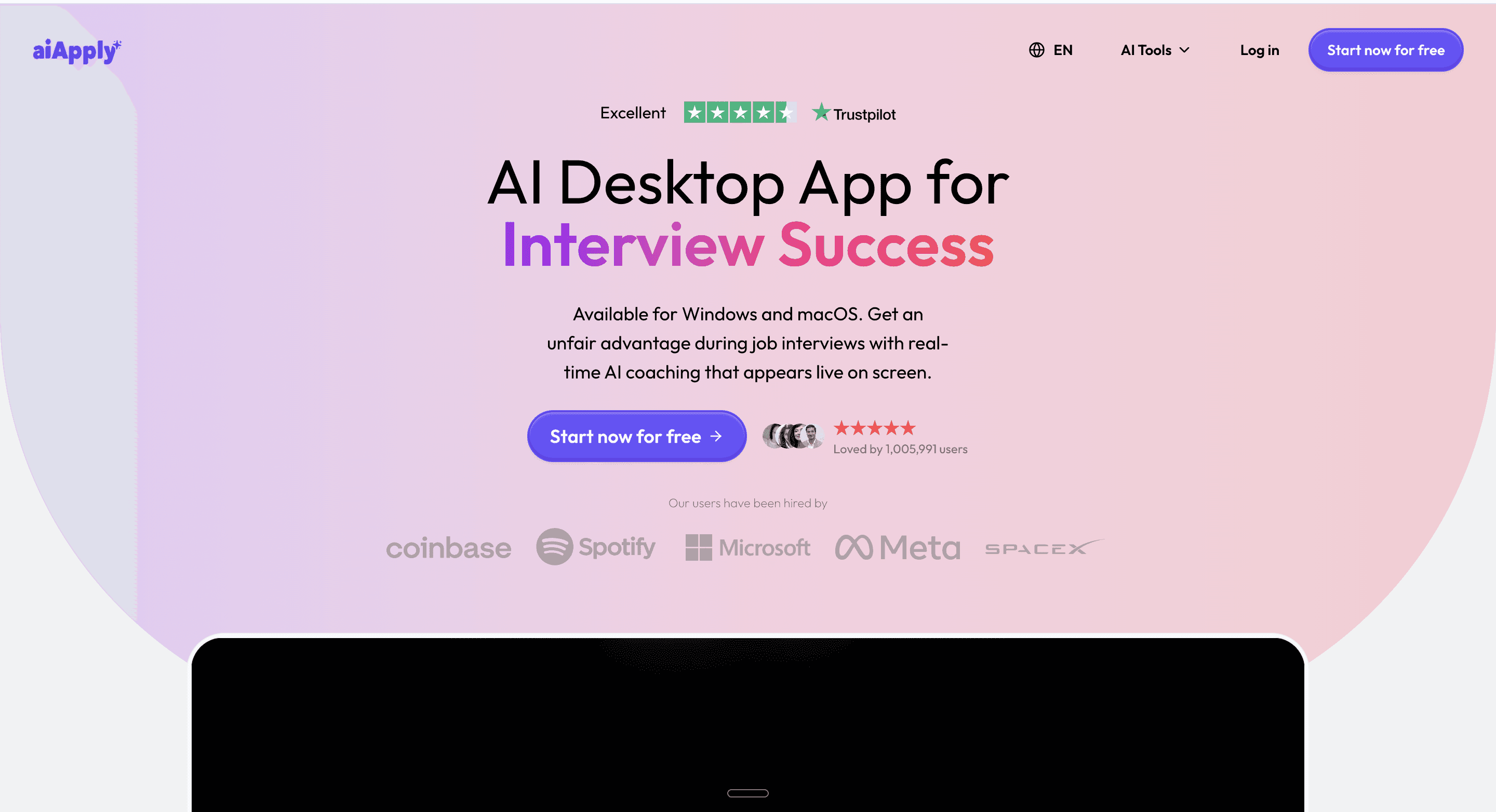
What it does:
Generates automated interview questions and basic practice sessions for general roles.
Best for:
Beginners or job seekers looking for simple, fast practice.
Strengths:
Quick question generation
Easy to use
Good for warming up
Limitations:
Limited depth
Not designed for advanced interview scenarios
Who should choose it:
Freshers or candidates who want easy early-stage practice.
Good for broad preparation, but not a replacement for deeper interview prep tools.
Related: AiApply Alternatives
9. Final Round AI
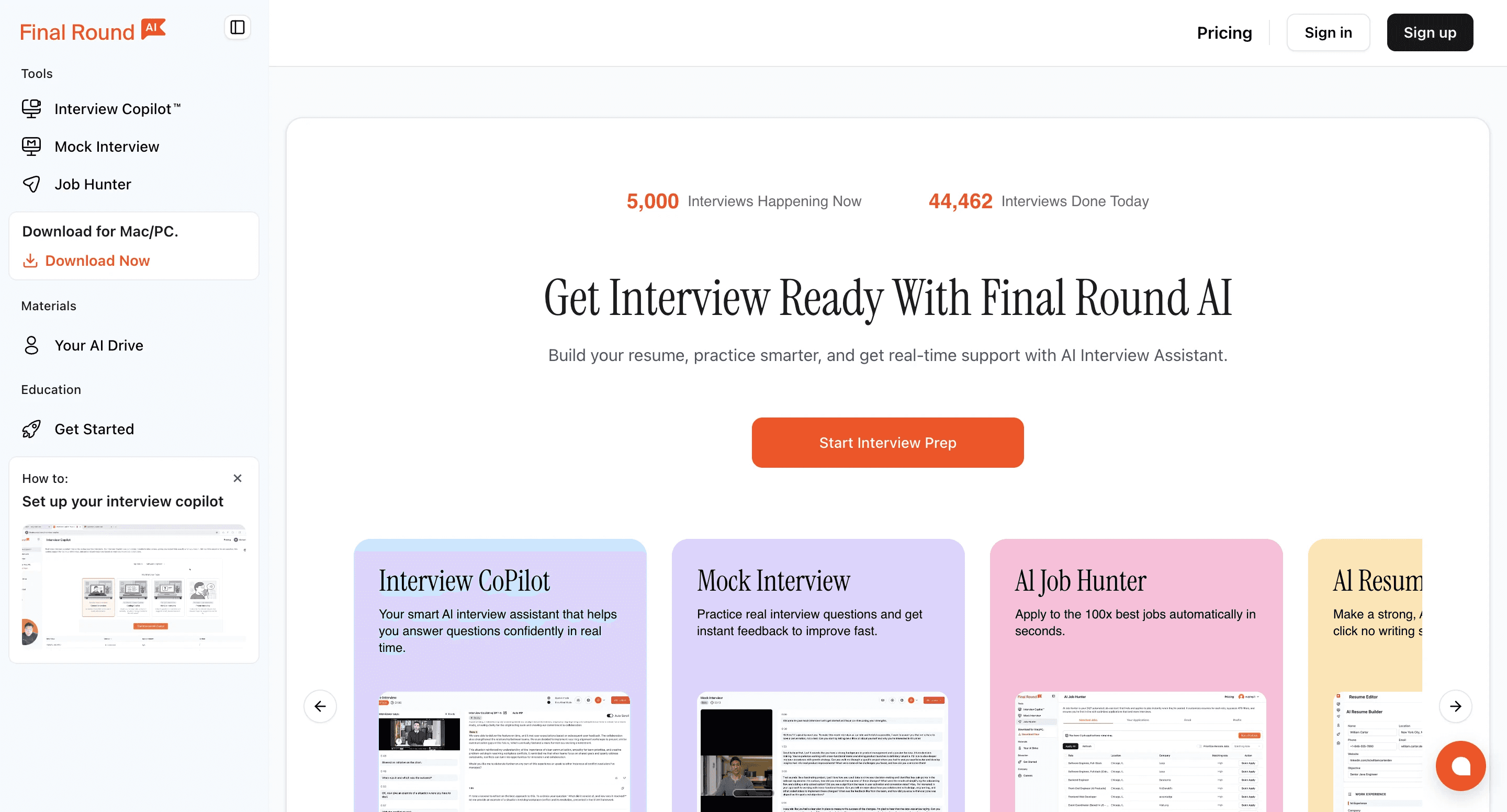
What it does:
Offers strong frameworks and challenging question sets, especially for strategy, consulting, business, and PM-style interviews.
Best for:
Competitive roles where structured reasoning and frameworks matter.
Strengths:
High-level interview prompts
Strong strategy and product thinking focus
Useful for mid- to senior-level candidates
Limitations:
Can feel dense for entry-level candidates
Less focused on vocal delivery coaching
Who should choose it:
Ambitious professionals preparing for high-bar interviews in tech, business, or consulting.
One of the best tools for deep thinking and structured reasoning practice.
Related:
10. Parakeet AI
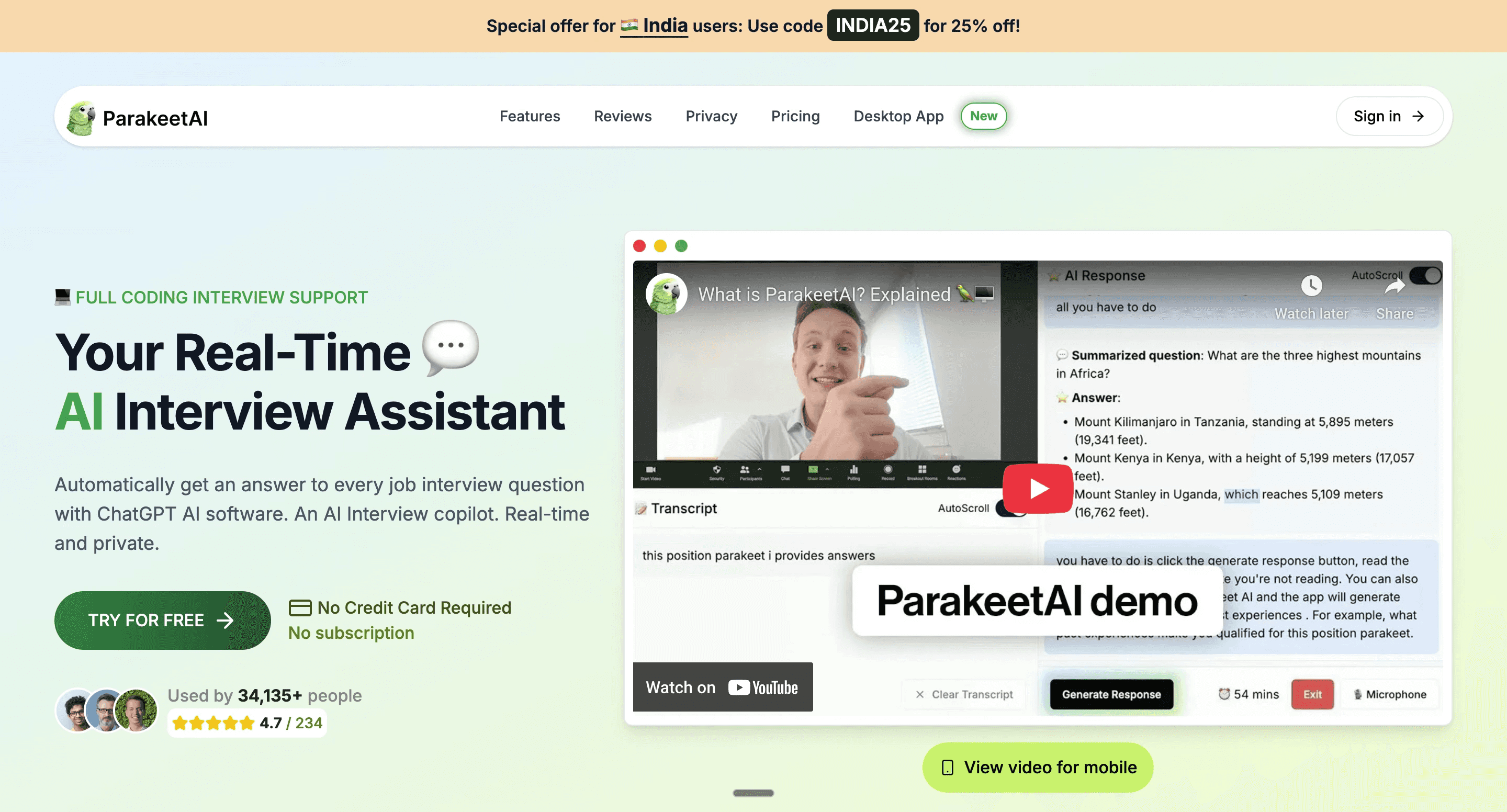
What it does:
A quick voice-practice tool offering rapid-fire questions and instant feedback.
Best for:
Daily repetition and confidence building.
Strengths:
Fast and flexible
Great for boosting confidence
Easy to use for short sessions
Limitations:
Not a full simulation
Feedback is lighter than advanced tools
Who should choose it:
People who like short bursts of practice throughout the week.
Ideal for maintaining momentum and staying interview-ready with minimal effort.
Related:
Role-Specific Recommendations
Every role comes with its own interview style, expectations, and communication patterns. Choosing the right AI interview prep tool depends on what your interviews will test: reasoning, clarity, technical depth, persuasion, or storytelling. Here’s how different job types can match the right practice approach.
Software Engineers
Software engineering interviews often combine algorithm practice, debugging challenges, and system design reasoning. Tools that simulate step-by-step thinking or technical walkthroughs help you practice explaining your logic clearly under pressure.
Best suited tools: Those offering structured coding prompts, reasoning paths, and technical follow-ups.
Related
Software Engineer Interview Questions
Product Managers
PMs are evaluated on strategy, prioritization, and product thinking. Great PM prep requires practicing ambiguous problems, feature breakdowns, and customer-centric reasoning.
Best suited tools: Platforms with scenario-based questions, case-style thinking, and behavioral depth.
Related:
Product Manager Interview Questions
Product Manager Interview Questions
Designers
Design interviews center around portfolio storytelling, design critiques, and the ability to explain decisions with clarity. Practicing how you speak about process, iterations, and trade-offs is crucial.
Best suited tools: Voice-supported practice where you can rehearse walk-throughs and narrative delivery.
Related:
Graphic Designer Interview Questions
Sales Roles
Sales interviews focus heavily on objection handling, conversational flow, and rapport-building. Realistic voice-based simulations help refine tone, persuasion, and communication rhythm.
Best suited tools: Tools with conversational back-and-forth and real-time delivery insights.
Freshers
Entry-level candidates often need support with confidence building, communication clarity, and basic behavioral practice. Tools with guided coaching and beginner-friendly pacing work best.
Best suited tools: Warm-up platforms and structured, feedback-rich practice paths.
Career Switchers
Career changers must master structured frameworks and storytelling around transferable skills. A strong prep tool helps refine your transition narrative and frame past experience convincingly.
Best suited tools: Platforms offering behavioral coaching, guided frameworks, and clarity feedback.
Pull-out Tip
“Choose a tool that mirrors the interview format you expect.”
If your interview will be conversational, use a voice-based simulator. If it’s structured or case-driven, pick a tool with frameworks and scenario depth.
How to Choose the Right AI Interview Prep Tool
Not every tool fits every candidate. The best AI interview prep tool is the one that matches your role, your learning style, and your interview format. You can also use APIs to apply on jobs faster and streamline repetitive applications. Use this simple guide to narrow your choices.
1. Your Role
Different roles require different interview muscles.
Engineers need reasoning and problem-solving depth.
PMs need strategy, prioritization, and product thinking.
Designers need narrative clarity and portfolio delivery.
Sales roles need conversational tone and objection handling.
Choose a tool that aligns with the type of interview you'll face.
2. Your Experience Level
Your prep path should reflect where you are in your career.
Freshers: Need guided structure, confidence building, and clarity coaching.
Mid-level candidates: Benefit from realism and role-specific scenarios.
Senior candidates: Need advanced scenario-based practice and strategic prompts.
3. Voice vs. Text Format
Match your practice style to your actual interview format.
Voice-based practice: Best for live interviews, phone screens, and conversational rounds.
Text-based practice: Ideal for preparation, answer structuring, and asynchronous interviews.
4. Realism vs. Scoring
Some tools focus on simulation, others on analytics.
Realism: Helps with flow, follow-up questions, and interview pacing.
Scoring: Helps identify communication patterns, filler words, or behavioral gaps.
Choose based on what you need most right now.
5. Time Left Before Your Interview
Your timeline determines your prep strategy.
24-48 hours: Quick drills, warmups, and rapid feedback tools.
1-2 weeks: Mix of simulation + coaching for well-rounded preparation.
A month or more: Structured progression with tracked improvements.
6. Coaching vs. Repetition
Different people learn differently.
Coaching: Works best if you need guidance, clarity, and structure.
Repetition: Great for confidence, delivery, and reducing anxiety.
The strongest prep routines combine both.
“Practice should feel as close to the real environment as possible.”
The closer your practice resembles your actual interview, the better your performance will be.
FAQ
1. What is the best AI interview prep tool overall?
The most balanced all-around tool is Interview Sidekick, thanks to its natural voice simulation, structured coaching, role-specific paths, and clarity-focused feedback. It covers behavioral, technical, and communication skills better than most single-purpose platforms.
2. What is the best free AI interview prep tool?
Google Interview Warmup, Yoodli (free tier), Parakeet AI (free tier), and Interviews by AI (free credits) all offer meaningful practice without payment. These tools are ideal for beginners, warmups, and early-stage preparation.
3. What’s the best AI interview prep tool for software engineers?
For engineers, tools with technical depth work best. LockedIn, Interview Sidekick, and Final Round AI stand out because they support system design, reasoning, debugging-style discussions, or structured behavioral prep specifically tailored for engineering interviews.
4. What’s the best AI interview prep tool for product managers?
PMs benefit from tools that test strategy, prioritization, and product thinking. Final Round AI and Interview Sidekick both offer strong product-sense prompts, scenario questions, and behavioral frameworks.
5. What’s the best AI interview prep tool for designers?
Designers need help with portfolio storytelling, critiques, and process explanations. Voice-based tools like Interview Sidekick and delivery-focused platforms like Yoodli help refine articulation and presentation clarity.
6. What’s the best AI interview prep tool for sales roles?
Sales interviews rely on tone, pacing, rapport-building, and objection handling. Interview Sidekick and Parakeet AI are strong options because they simulate conversational back-and-forth and help with delivery and confidence.
7. What’s the best AI interview prep tool for freshers?
Freshers often need structure, confidence-building, and clearer communication. Google Interview Warmup, Interviews Chat, and beginner-friendly paths in Interview Sidekick work especially well.
8. Which AI interview prep tools are best for voice practice?
If your interview will be spoken, prioritize tools like Interview Sidekick, Yoodli, Parakeet AI, Huru, and Google Interview Warmup (voice transcription). These platforms help refine tone, pacing, filler words, and confidence.
9. Which tools offer performance scoring or analytics?
Tools with measurable insights include Interview Sidekick, Yoodli, Interviews by AI, and Final Round AI. These platforms show trends in clarity, structure, delivery, filler words, or answer quality.
10. Which AI interview prep tools provide strong behavioral coaching?
For structured storytelling and behavioral frameworks, Interview Sidekick, Final Round AI, and Beyz deliver reliable guidance rooted in STAR-style reasoning and professional communication.
11. How many mock interviews should I complete before the real interview?
Most candidates see strong improvement after 3 to 5 practice sessions:
One warmup
One structured practice
One full simulation
Extra sessions help if you're preparing for competitive roles or switching careers.
12. Should you use multiple AI interview prep tools?
Yes. Many job seekers combine tools:
Warmup tools for early practice
Simulation tools for realism
Analytics tools for delivery insights
Mixing formats covers both content and communication skills.
13. Do interview prep tools replace human mock interviews?
Not fully. AI tools are ideal for repetition, confidence-building, and feedback that humans can’t offer at scale. However, human mock interviews still add nuance, industry context, and personalized insight. The strongest prep strategy uses both.
14. Which AI interview prep tool feels the most realistic?
Voice-based simulators with adaptive questioning-such as Interview Sidekick and Final Round AI-offer the most lifelike preparation. They mimic real conversation patterns, follow-up questions, and natural pacing.
15. What’s the best tool for last-minute interview preparation?
For fast practice when you're short on time:
Google Interview Warmup (for clarity)
Parakeet AI (for rapid drills)
Yoodli (for delivery)
For a realistic quick simulation, Interview Sidekick is the strongest choice.
Conclusion
Interview preparation in 2026 isn’t just about memorizing answers-it’s about practicing clarity, structure, and real conversational flow. The tools in this guide show how far technology has come in helping candidates rehearse interviews the way they actually happen: spoken, fast-paced, and filled with follow-up questions that test reasoning as much as content.
Whether you’re a software engineer refining system design explanations, a product manager practicing strategy questions, a designer polishing your storytelling, or a fresher building confidence, the right prep tool can make the process feel less overwhelming and far more effective. Each platform in this list has a different strength-some excel at voice-based realism, others at analytics, others at role-specific practice-so the best choice depends on your goals, timeline, and interview style.
If you want the most complete mix of realism, structure, and actionable feedback, Interview Sidekick stands out as the strongest all-around option. But great preparation rarely comes from a single tool. The most successful candidates combine warmups, simulations, analytics, and repetition to build confidence from every angle.
Use this guide to understand where you are, what your interview requires, and which tool matches your preparation style. With the right practice routine-and the right prep partner-you’ll walk into your next interview feeling sharper, clearer, and ready to show employers your best work.



 4.8 from 2,500+ reviews
Turn failed interviews into offers accepted
No credit card required • Cancel anytime