Spark Hire Interview Questions and Answers 2026
 Rishabh Jain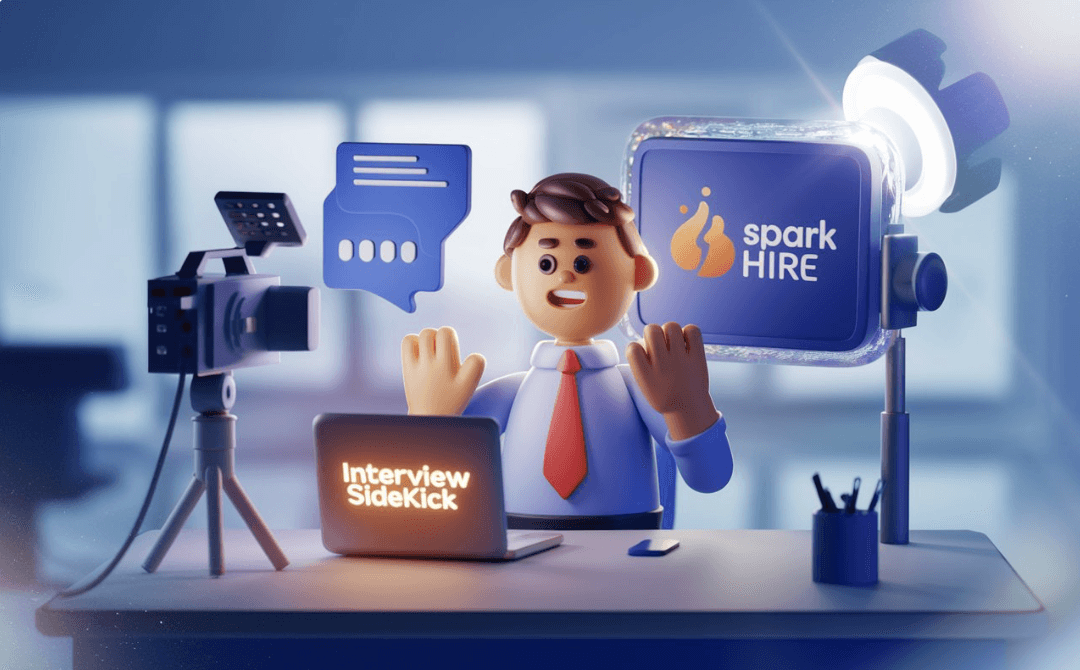
What is Spark Hire?
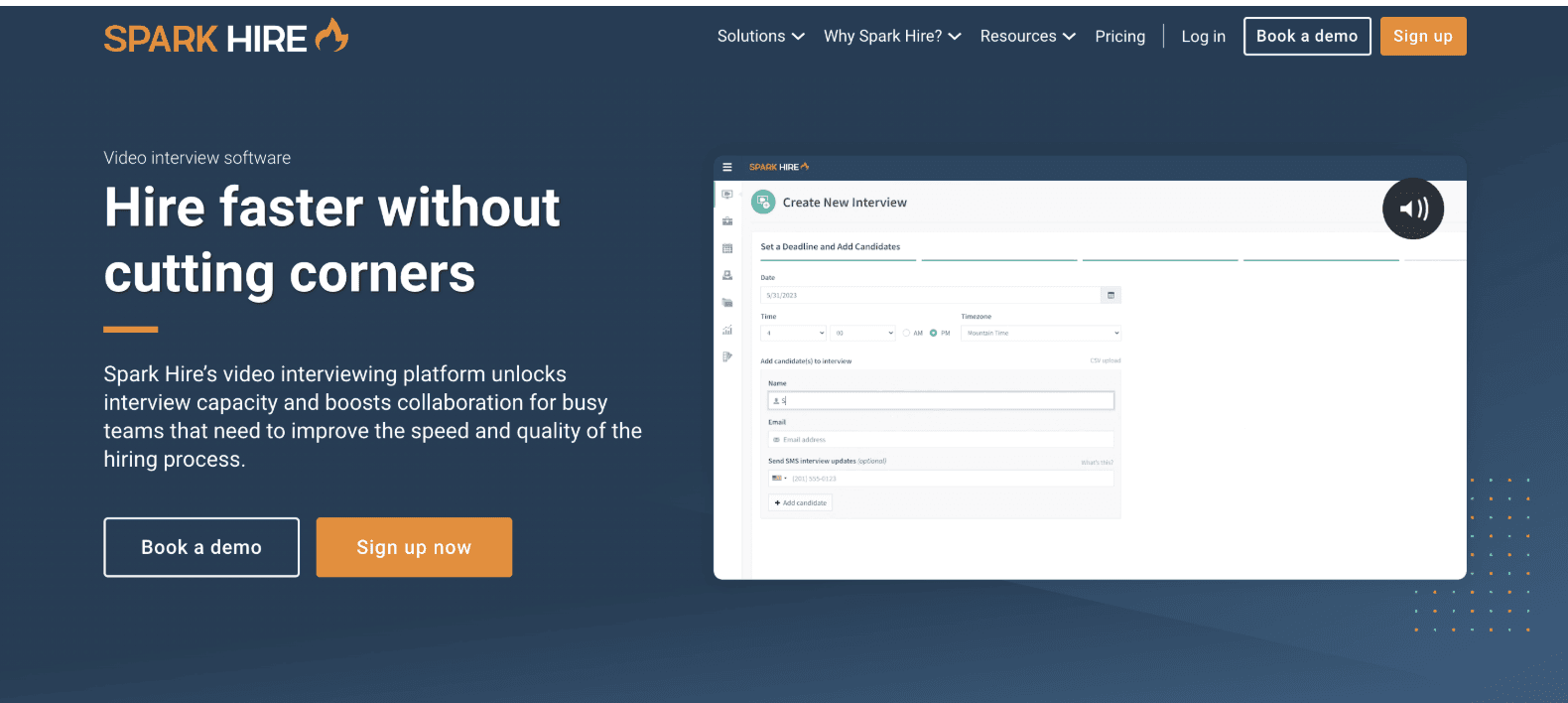
Spark Hire is one of the major video interview software and more than 6,000 companies are using it. With this, employers are enabled to carry out one-way video interviews with candidates. Here, in this interview process, candidates answer pre-set questions on camera, but no interviewer is present. This approach makes hiring more productive by letting recruiters screen many candidates faster. Unlike live interviews, these don’t happen in real-time — job seekers record answers on their own schedule, and recruiters review them later.
How Does Spark Hire Work?
One-Way Interviews: Applicants answer a list of questions by recording themselves. There’s no real-time chat with an interviewer.
Interview Flexibility: Job seekers can finish the interview when it suits them as long as they meet the given deadline.
Multiple Attempts: Spark Hire lets candidates redo their answers several times, so they can give their best shot.
Shorter Hiring Process: Companies can check out applicants without having to set up a live interview.
Spark Hire is handy for initial screenings and helps employers zero in on the top candidates to move forward.
Understanding the Spark Hire Interview Format
Before diving into specific questions, it's important to understand exactly how a Spark Hire interview works — because it's fundamentally different from a live interview, and your strategy needs to reflect that.
One-Way Async Format: What That Actually Means
In a Spark Hire one-way interview, there is no interviewer on the other end. You'll see a written question appear on screen (sometimes with a short video from the recruiter introducing it), and then you record your answer on camera. The recruiter watches your recording later — sometimes days later — alongside dozens of other candidates. This means you need to be engaging and concise from the very first second, because there's no back-and-forth to build rapport.
Time Limits Per Question
Most Spark Hire interviews give you 2 to 3 minutes per question, though some employers set it as low as 1 minute or as high as 5. You'll see a countdown timer on screen while recording. Key things to know:
The recording stops automatically when time runs out — mid-sentence if necessary. Always aim to wrap up 10-15 seconds early.
You typically get 30 seconds of think time before recording starts. Use this to mentally outline your answer using the STAR framework (Situation, Task, Action, Result).
For 2-minute limits, aim for 3-4 key points maximum. Trying to cram in more will make you sound rushed.
For 3-minute limits, you have room for one detailed example with context. Don't fill time for the sake of it — a focused 2-minute answer beats a rambling 3-minute one.
Retakes: How Many and When to Use Them
Most employers allow 1 to 3 retakes per question, though some allow unlimited and a few allow none. Here's how to approach them strategically:
Don't aim for perfection on take one. Treat your first recording as a warm-up if retakes are available.
Only re-record if there's a clear issue — you blanked on a key point, went significantly over time, or had a technical problem. Minor pauses are fine.
Check retake limits before you start. The number of available retakes is usually shown at the beginning of the interview.
Recording Tips: Video Answers vs. Live Interviews
Recording yourself on camera without another person present creates unique challenges:
Look at the camera lens, not the screen. In a live Zoom call you look at the other person's face, but in a one-way recording, looking at the screen makes you appear to be looking down.
Energy needs to be 20% higher than normal. Without real-time feedback, your natural energy reads as flat on camera. Smile more and vary your tone.
Your background and lighting matter more. Use a plain background with light facing you, not behind you.
Test your audio before you start. Spark Hire lets you do a test recording. Always use it.
Don't read from notes on screen. Recruiters can tell. A few bullet points on a sticky note next to your camera is fine, but never a full script.
11 Common Spark Hire Interview Questions with In-depth Answers
Spark Hire Interview Questions
Tell Me About Yourself
Why Do You Want This Job?
What Are Your Strengths?
What Are Your Weaknesses?
Tell Me About a Challenge You’ve Overcome
Why Are You Leaving Your Current Job?
Where Do You See Yourself in 5 Years?
How Do You Handle Stress?
What Do You Know About Our Company?
What Makes You a Good Fit for This Role?
Why Should We Hire You?
Tell Me About Yourself
This question gives employers a good view of your history, skills, and character. Keep it brief, work-focused, and job-relevant.
Answer: “I’ve spent the past five years working as a full-stack developer, building web applications across different industries. With each project, I’ve focused on creating solutions that aren’t just functional today but are also designed to grow and adapt in the future. I am skilled in any kind of JavaScript framework and React and Node.js come to mind.”
Relevant:
Why Do You Want This Job?
The employer checks if you understand the role and how it fits with your career plans.
Answer: “I’m really excited about this opportunity because it would let me put my full-stack skills to work on some truly groundbreaking projects. I’ve done my homework on your company and am genuinely impressed by your commitment to tech-driven solutions. That approach really resonates with me, as I’m always motivated to stay ahead of the tech curve.”
What Are Your Strengths?
Focus on strengths that matter for the job you want.
Answer: “I can say my primary strength is the ability to adapt myself very well. In my previous job, I had to learn a lot of new tech and apply it to ongoing projects, making the developmental process faster and better. Also, I’m good at talking to people, which helps me work well with teams.”
What Are Your Weaknesses?
This question tries to gauge how well you know yourself. You should present your weakness in a way that shows you’re taking steps to get better at it.
Answer: “I tend to get caught up in small details, which can slow me down on bigger projects. But I’ve figured out how to set my priorities and use my time more by giving myself strict deadlines.”
Tell Me About a Challenge You’ve Overcome
This question checks how you deal with tough situations and fix problems.
Answer: “We had to finish a client project at my last job, but halfway through the project, we found some bugs. As I stepped up to find the problem, I got the team to test fast; we completed the project on time without cutting corners.”
Why Are You Leaving Your Current Job?
Don’t say bad things about your current job. Instead, talk about the good things about the new job.
Answer: “I want to take on new challenges and grow. My current job has been good, but I think this new job gives me more chances to move up and fits better with what I want to do in the long run.”
Where Do You See Yourself in 5 Years?
Companies want to make sure your long-term plans match their growth plans.
Answer: “Five years from now, I picture myself taking on more leadership roles — maybe running a development team. I also want to keep improving my technical skills to stay on top of new tech trends.”
How Do You Handle Stress?
This question is asked to see how you handle tough situations.
Answer: “If I am stressed, I remain calm and organized while working. Even in difficult situations, I break the job into smaller parts of work and try solving them one by one. This approach helps me keep my cool and produce top-notch work.”
What Do You Know About Our Company?
Research plays a crucial role in this question. Prove you’ve done your homework on the company.
Answer: “I’ve discovered that your company puts a premium on new ideas and customer-focused solutions. I saw that you recently invested in AI technology and are clearly aiming for the top spot in the industry — that is exactly the kind of work I want to be part of.”
What Makes You a Good Fit for This Role?
Point out your skills, experience, and traits that set you apart.
Answer: “My deep knowledge of full-stack development, along with my knack for leading projects and teaming up well, makes me a strong candidate. I’m keen on the chance to join your team and work on cutting-edge projects.”
Why Should We Hire You?
Sum up what you bring to the table and your passion for the job.
“You can hire me for the reason that I have experience in delivering high-quality on-time projects. I bring solid technical skills alongside a genuine love for collaboration, and I am results-driven — ready to add value to your team from day one.”
Those were some common Spark Hire Interview questions.
Expert Tips to Crack Your Video Interview
Additional tips to crack Spark Hire interview:
Keep It Brief: Finish your answer in 1-2 minutes if no extra detail is required.
Apply the STAR Approach: Use the STAR method to answer Spark Hire interview questions. This means explaining the Situation, Task, Action, and Result to make your point.
Dress Well: Even though you’re not meeting in person, wearing professional clothes can help you get in the right frame of mind.
Stay True to Yourself: Spark Hire Video interviews might feel a bit cold, but don’t let that stop you from showing who you are. Remember to smile, speak, and show your excitement about the job.
Take Your Time: You might get more than one shot at each question. Make the most of this chance by doing another take if you think you can give a better answer.
Common Mistakes to Avoid
Do not rush your responses
Lack of Eye Contact
Complex Answers
Using Tools to Get Ready
Huru: A tool powered by AI that lets you practice interviews. It copies the real interview experience. It gives you feedback right away on how you move, how you sound, and what you say. This helps you get better before your actual interview.
Interview Sidekick: Another great tool good at giving structured feedback on video interviews. It helps you make your answers better, improve how you use your body, and get better at how you present yourself overall.
Final Tips for Spark Hire Interviews
Practice
Dress
Prepare in Advance:
Conclusion (Spark Hire)
Compared to traditional one-way video interviews, Spark Hire is not hard to overcome if you prepare and practice. From your brief, reflective responses, to your professional attitude and full utilization of technology to rehearse, really succeeding in that next interview for you, here are tips mentioned above.